EPA’s Zeldin suggests greater danger exists in fireworks displays
By Pat Elder
November 26, 2026
Hours after the U.S. Army detonated nearly five tons of degraded, crystallized lead azide at the Iowa Army Ammunition Plant in Middletown, Environmental Protection Agency Administrator Lee Zeldin took to social media to wave away the anxiety gripping the Midwest. Touting preliminary air monitor readings, Zeldin offered a remarkable comparison to put the open-air blast of 68 barrels of toxic explosive into "perspective": the particulate matter released by a Kansas City fireworks display at a World Cup Fanfest, he claimed, was roughly ten times greater.
For families across southeastern Iowa and western Illinois—who spent the morning sheltering in place, packing overnight bags, and preparing to wet down backyard swing sets on the advice of military planners, Zeldin’s pyrotechnics analogy landed less like scientific reassurance and more like public relations spin. While public skepticism toward Pentagon assurances on base contamination has grown over decades, many Americans still reflexively trust the EPA and state environmental regulators to act as an independent referee. That trust rests on a profound misperception of what the agency has become. Since its creation in 1970, the EPA was meant to stand as a bulwark between the health of the American public and the reckless disregard of polluting corporate and military interests.
Under Zeldin, that bulwark has been converted into a cheerleading squad.
Nowhere is the subordination of environmental protection to political theater clearer than in how the White House managed the Iowa crisis. Rather than empowering career scientists to lead an independent assessment, the administration centralized control in the West Wing under White House Chief Stephen Miller.
As President Trump and administration allies showered Miller with praise for orchestrating the federal response, the episode underscored the constitutional reality of Miller’s role in this White House. Much like Richard Nixon’s notorious West Wing enforcers H.R. Haldeman and Charles Colson—who erected a wall around the presidency and bent federal agencies to executive will, Miller operates as an unaccountable blunt-force hammer who routinely bypasses statutory guardrails and congressional mandates. In Iowa, the EPA did not act as a credible regulator holding the Defense Department to account; it functioned as a messaging arm validating a preordained military operation.
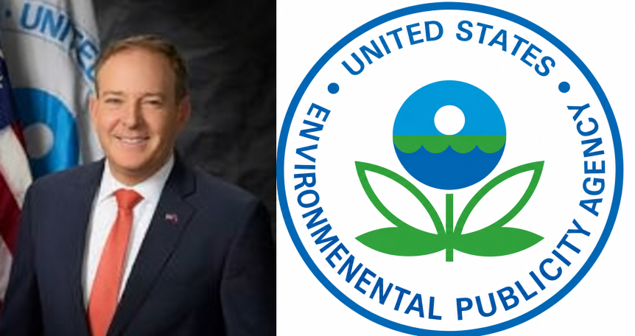
The Trump-Zeldin Environmental Publicity Agency
Which raises an urgent question for anyone still taking comfort in an EPA seal of approval: Why should the American public trust Lee Zeldin’s assurances about toxic fallout in Iowa when his entire tenure has been a wrecking ball aimed at the agency’s scientific infrastructure? Before Zeldin stood before cameras to declare Middletown’s air as benign as a holiday fireworks show, he had already spent nearly two years dismantling the very rules, monitoring mandates, and independent advisory boards designed to detect and prevent chemical harm. Framed under the administration’s "Powering the Great American Comeback" initiative—which began with a March 2025 blitz of 31 major regulatory reconsiderations—Zeldin’s record is a case study in regulatory capture. To understand why the EPA’s clean bill of health in Iowa rings hollow, examine the systematic deregulation Zeldin has carried out across every pillar of environmental law.
Setting Back the Clock on PFAS and Gutting TCE Protections
Nowhere is the EPA’s hostility to public health science more glaring—or more damning—than in its dismantling of landmark protections against "forever chemicals" and toxic industrial solvents. In both cases, career scientists had already completed years of rigorous, peer-reviewed risk evaluations, only for Zeldin’s leadership team to intervene on behalf of its clients, military branches and industries.
On per- and polyfluoroalkyl substances (PFAS)—a class of persistent, bioaccumulative chemicals linked to cancer, immune suppression, and developmental harm—Zeldin systematically turned back the calendar on the nation’s first enforceable drinking water standards. Zeldin moved in May 2025 to rescind drinking water limits for four major PFAS compounds (PFHxS, PFNA, HFPO-DA/GenX, and PFBS mixtures) while pushing back compliance deadlines for PFOA and PFOS from 2029 to 2031. At the same time, the agency repeatedly delayed mandatory industry chemical reporting under the Toxic Substances Control Act (TSCA) and terminated a host of PFAS research grants. Rather than accelerating the cleanup of contaminated communities, many of them neighboring military installations, the Zeldin EPA gave utilities and chemical manufacturers years of additional leeway while stripping federal limits from emerging replacement compounds.
The agency’s treatment of trichloroethylene (TCE)—a known human carcinogen heavily used by the military, linked to liver cancer, kidney cancer, non-Hodgkin lymphoma, and fetal heart defects—was equally indefensible. In December 2024, after decades of Obama-Biden delay, the EPA had finalized a comprehensive ban prohibiting all uses of TCE, with most commercial and consumer uses phased out within a year.
Under Zeldin, the agency immediately froze the rule’s effective date and began carving out piecemeal retreats. Through a series of administrative stays, an interim final rule in September 2025, and proposed extensions in October 2026, Zeldin’s EPA repeatedly postponed workplace safety conditions, extended wastewater disposal allowances, and pushed compliance deadlines for chemical processors and industrial users out to late 2027 and 2028. What should have been a decisive public health milestone was reduced to a rolling series of industry exemptions.
Gutting the Climate and Clean Air Pillars
That same willingness to erase settled science defines Zeldin’s broader assault on the Clean Air Act. In February 2026, Zeldin and President Trump finalized the repeal of the 2009 Greenhouse Gas Endangerment Finding, eliminating the foundational legal and scientific determination that planet-warming emissions threaten public health and welfare. Alongside that move, the EPA wiped out federal greenhouse gas standards for light-, medium-, and heavy-duty vehicles from model year 2012 onward, while stripping out efficiency credits for automakers.
The deregulatory sweep quickly extended to the nation’s power grid and industrial corridors. In September 2026, the agency finalized a rule gutting the 2024 Carbon Pollution Standards for Fossil Fuel-Fired Power Plants, eliminating carbon capture requirements for coal and natural gas facilities while moving to rescind all remaining power-sector greenhouse gas limits. Simultaneously, the agency moved to reconsider mandatory industrial emissions reporting and slashed the Social Cost of Carbon metric, effectively erasing trillions of dollars in projected climate damages from federal cost-benefit analyses.
Rolling Back Protections Against Toxic Air
For communities living downwind of heavy industry—or military detonation sites—the Zeldin EPA’s retreat from conventional air toxics is even more immediate. In February 2026, the agency finalized a rollback of the 2024 Mercury and Air Toxics Standards (MATS), reverting coal- and oil-fired power plants back to 2012 baseline limits. That decision eliminated stricter caps on fine particulate matter, tighter mercury limits for lignite-fired plants, and continuous emissions monitoring requirements—the very kind of real-time data needed to verify air safety during toxic events.
The agency has applied the same permissive standard to known carcinogens and smog-forming pollutants. Following a wave of industry compliance exemptions, the EPA moved in March 2026 to repeal tighter 2024 emission limits on ethylene oxide, a potent carcinogen used in commercial medical device sterilization. It also initiated steps to dismantle the "Good Neighbor" Plan targeting cross-state smog.
Shrinking Clean Water and Waste Oversight
On the ground and in the water, Zeldin’s team has systematically narrowed federal jurisdiction while relaxing rules governing industrial dumping and chemical accidents. Through rulemaking spanning late 2025 and September 2026, the EPA and Army Corps of Engineers moved to redefine "Waters of the United States" (WOTUS) to cover only relatively permanent waterways with continuous surface connections. That narrower definition strips Clean Water Act protections from ephemeral streams, seasonally dry wetlands, and groundwater, precisely the pathways through which surface waters from military bases runoff into local watersheds.
At the same time, the agency moved to loosen wastewater treatment standards for steam electric power plants and expand permitted uses for oilfield wastewater. Oversight of toxic coal ash impoundments is being shifted away from federal enforcement toward state-led programs, while the agency has initiated a rollback of the 2024 Risk Management Program (RMP) rule, which required chemical plants and refineries to strengthen accident prevention and emergency response planning.
Hollowing Out Science and Enforcement
Perhaps most consequential for crises like the one in Middletown is how Zeldin has dismantled the EPA’s internal capacity to act as an independent watchdog. Early in his tenure, Zeldin cleared and reconstituted both the Science Advisory Board (SAB) and the Clean Air Scientific Advisory Committee (CASAC), sidelining independent researchers who review the scientific integrity of agency actions. He shuttered the Office of Environmental Justice, deleted the public EJScreen mapping tool used to track cumulative pollution burdens in vulnerable communities, and canceled hundreds of millions of dollars in local monitoring and resilience grants.
Meanwhile, federal enforcement has largely given way to corporate accommodation. The administration has reduced agency staffing through workforce cuts, and subordinated federal oversight to state discretion and White House messaging.
When Lee Zeldin tells the people of Iowa that detonating nearly five tons of degraded explosives is no worse than watching a fireworks show, he is asking the public to extend him a level of institutional trust his own agency has spent two years incinerating. An EPA that delays forever-chemical cleanups, guts cancer-causing solvent bans, weakens toxic air monitoring, purges independent scientific advisors, and takes its marching orders from political enforcers in the West Wing is no longer standing between the public and environmental harm—it is simply clearing the smoke for tomorrow’s detonations.
I need financial support to keep this going. Please donate here.