
By Pat Elder
November 6, 2026
California State University Monterey Bay (CSUMB) is actively exposing students, faculty, and staff to dangerous levels of lead contamination in drinking water across campus, including at the main Dining Commons. The university is hiding behind lax federal compliance limits rather science-based standards that protect public health. The university is located at the Fort Ord National Priorities List Superfund Site.
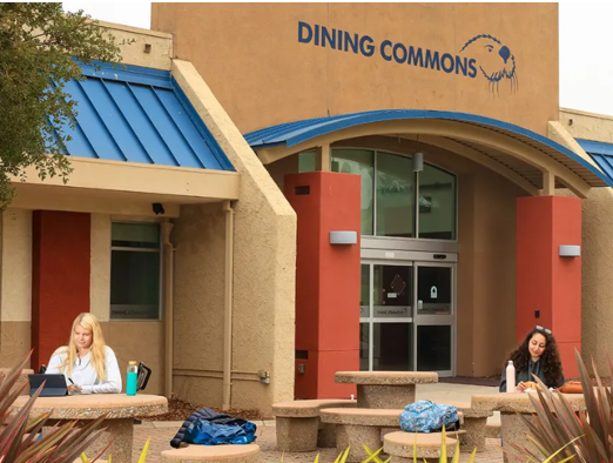
What are they drinking? bottled water? or the water from the Dining Commons?
Toxic Water in the Cafeteria
Students and faculty understand that CSUMB’s physical footprint sits directly over the historic Fort Ord Army base, where many core structural buildings were constructed by the military in the mid-20th century. The university community has long navigated unsettling reports of base-wide toxicity, from groundwater contamination to clusters of cancer diagnoses within the local population. Yet, while governmental attention has focused on external environmental cleanups, a severe health hazard remains completely unaddressed on campus: lead exposure from contaminated infrastructure inside school walls and plumbing fixtures. This has turned daily routines like eating breakfast, attending class, or sleeping in a dorm room into pathways for chronic heavy metal exposure.
See the entire CSUMB database here.
See the Snapshot of Lead levels in CSUMB Drinking Water here.
Understanding the Data
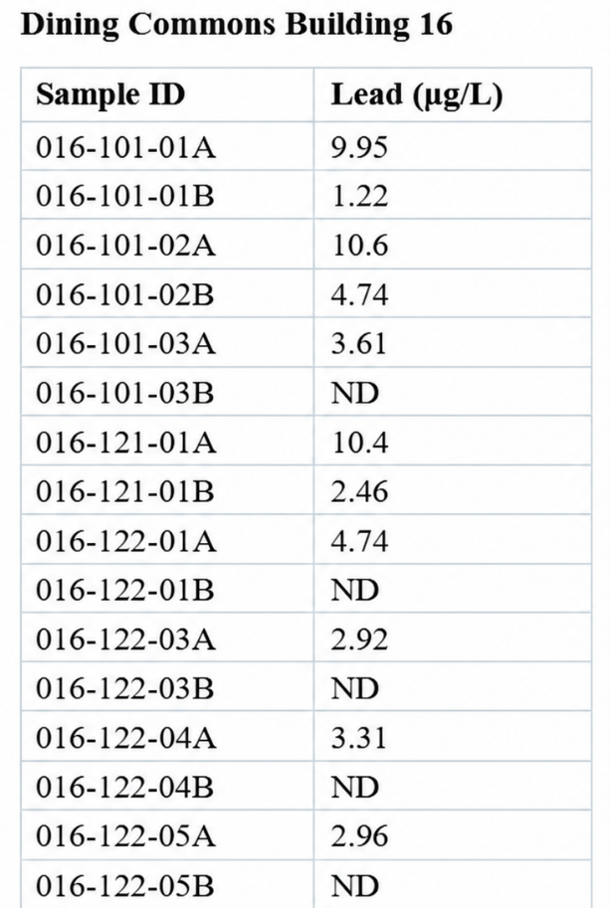
Data Code Note: In the sample codes here, 016 represents Building 16; 101, 121, and 122 represent specific rooms; 01/02 indicates the fixture location; and A/B designates the sample type. All results are measured in micrograms per liter [µg/L], equivalent to parts per billion [ppb].
Recent environmental testing within the Dining Commons—where hundreds of students consume water during breakfast, lunch, and dinner—reveals alarming concentrations of lead. There are approximately 45 water fixtures in the facility; testing was conducted at 8 fixtures. This represents a 17.8% sample size, and paints a troubling picture of localized contamination. To fully comprehend the systemic risks behind these numbers, one must examine the specific laboratory testing protocols:
"A" Samples (First Draw): These 250 mL samples are taken immediately after a tap has sat completely stagnant and unused for 6 to 18 hours. (EPA Sampling Protocol). This metric captures the lead leaching directly out of the immediate faucet fixture and internal brass components. Taps installed across campus have historically utilized high-lead brass components, containing up to 8% lead prior to stricter 2014 standards. This data means that anyone taking a drink first thing on a Monday morning from these fixtures receives a concentrated dose of toxic lead. In the Dining Commons, 3 out of 8 "A" samples exceeded 5 µg/L, with two spikes climbing over 10 µg/L (peaking at 10.6 µg/L at fixture 016-101-02A).
"B" Samples (Flushed Loop): These sequential samples are collected after letting the water run continuously for 30 seconds. This process flushes out the isolated contamination sitting within the faucet head and pulls water directly from the building’s internal branch piping and vertical supply lines. The seriousness of these "B" sample readings cannot be overstated. While an elevated "A" sample isolates a bad faucet fixture, a measurable "B" sample demonstrates that the deeper plumbing lines embedded inside the building are also actively leaching lead. In the Dining Commons, flushed "B" samples returned concentrations as high as 4.74 µg/L. This indicates that even after running a tap, the water contains lead, pointing to legacy Army-era plumbing lines as the likely culprit
California’s Office of Environmental Health Hazard Assessment established a strict advisory Public Health Goal (PHG) of 0.2 µg/L for lead in drinking water. This health-based benchmark was calculated specifically to safeguard against permanent neurobehavioral deficits, central nervous system damage, and measurable IQ loss. Yet, every single first-draw sample registered inside the campus Dining Commons vastly exceeds this health protective measure.
The Biological Toll
Lead is a cellular toxin that bio-accumulates extensively within mineralizing bone tissue and soft organs over years of repeated exposure. Public health agencies recognize that there is no known safe exposure threshold for lead ingestion. When individuals chronically consume water even at the lowest laboratory detection levels, their systemic accumulation can contribute to severe medical conditions:
Papillary Thyroid Carcinoma: Because lead interferes with the body's natural hormones, it disrupts the communication loop between your brain and your thyroid gland, which can physically change how the thyroid works and increase the risk of thyroid cancer. Papillary Thyroid Carcinoma demonstrates a statistically robust association between chronic lead exposure and a higher documented incidence of thyroid malignancies, specifically papillary thyroid carcinoma.
Anemia: Lead directly interferes with critical enzymatic pathways required to produce hemoglobin. This cellular disruption decreases red blood cell lifespans and restricts overall oxygen transport throughout the body.
Chronic Kidney Disease and Renal Impairment: Because the kidneys function as the primary filtration system for heavy metals, long-term lead accumulation causes moderate focal atrophy and interstitial fibrosis within the renal tubules. This structural damage can lead to an irreversible decline in filtration capacity.
Cardiovascular Disease and Hypertension: Chronic lead toxicity accelerates arterial stiffening, triggers severe localized oxidative stress, and decreases nitric oxide levels—a vital natural vasodilator. This biological chain reaction has been strongly linked to dangerously elevated blood pressure and long-term ischemic heart disease in adults.
Students currently experiencing symptoms or managing a diagnosis of thyroid disease, anemia, chronic kidney disease, or hypertension, are strongly advised to have their blood screened for lead. Individuals can initiate heavy metal testing by scheduling a clinical blood draw appointment at the Campus Health Center, located within the Health and Wellness Services complex (Building 80). They should follow up with their family doctor for additional testing and verification.
Don’t Drink the Water at the Health Clinic
Students being tested for lead in their blood are advised not to drink the water while they are inside the medical facility. In a twist of institutional irony, the Campus Health Center itself has registered concentrations as high as 12.9 µg/L of lead in its water supply. Walking into the campus medical center to check for heavy metal poisoning requires navigating a facility with infrastructure that is actively leaching lead into the tap water.
This exposure does not end when a student leaves the cafeteria or the medical clinic. Environmental testing shows that some residential dorm rooms on campus have lead levels climbing as high as 14.8 µg/L. Students are unwittingly ingesting lead with their meals at the Dining Commons, only to return to their private living spaces to draw heavily contaminated water from their residential taps.
This persistent contamination across campus has exposed a deep bureaucratic stalemate involving three powerful institutions: the Marina Coast Water District (MCWD), the university administration, and the U.S. Army. Each entity repeatedly points to other agencies as responsible for any contamination and cleanup. Meanwhile, the campus community continues to use contaminated taps.
The roots of this crisis lie in the evolution of federal water policy. Even though EPA and other agencies warn that there is no safe level of lead exposure in drinking water, there is no enforceable exposure standard for lead. Why? It is a regulatory conundrum due to the existence of lead-containing service lines, lead-containing internal pipes and soldered joints in buildings and homes, and lead-containing fixtures and taps. Corrosive elements may also be present in the water itself that can increase leaching of existing lead into the tap water. This causes a very difficult situation to regulate. In 2024, the EPA took the step to require most water utilities to replace their service lines within 10 years. However, the pipes and fixtures in individual buildings remain a problem. The regulatory agencies are left in the position of advising and educating the public on how to reduce lead. Filters can be purchased that will remove lead from water, but this may not be possible for low income households. Ideally, grants would be made available so that lead fixtures and pipes could be removed from buildings.
To remedy this, the EPA adopted the Lead and Copper Rule (LCR) in 1991, during the George H. W. Bush administration. However, environmental historians and public health advocates widely view the rule as failed legislation, diluted by intense municipal and utility lobbying. The LCR shifted regulatory focus directly to tap sampling, it established an extraordinarily lenient system-wide "Action Level" of 15 ppb (which will be reduced in eight years to 10 ppb). Public health agencies make it clear that the Action Level is merely an administrative trigger for system-wide corrosion control efforts, to slow lead leaching into drinking water. The Action Level is not a health-based safety guarantee for individual taps. However, compliance with this 15 ppb threshold is frequently misconstrued as safety. Nothing could be further from the truth; for example, California’s health-based Public Health Goal (PHG) is 0.2 µg/L – 0.2 ppb
Meanwhile, the consensus of medical authorities including the EPA remains absolute: there is no safe level of lead exposure in drinking water.
How the Lead and Copper Rule Works
Under federal guidelines, the Lead and Copper Rule requires mid-sized water utilities to sample a pool of just 60 specific taps across their entire service footprint—they are encouraged to choose locations which are at the highest risk for lead plumbing If the samples are less than or equal to the Action Level for two consecutive 6-month cycles, the water utility only has to take 30 samples the next cycle. MCWD has shown compliance for the water samples it has collected, so now, it only has to collect 30 samples. If more than 10 percent of these 30 samples (the 90th percentile) exceed 15 ppb, the utility triggers a formal regulatory violation. The testing by MCWD last year showed no lead in the 30 taps it sampled.
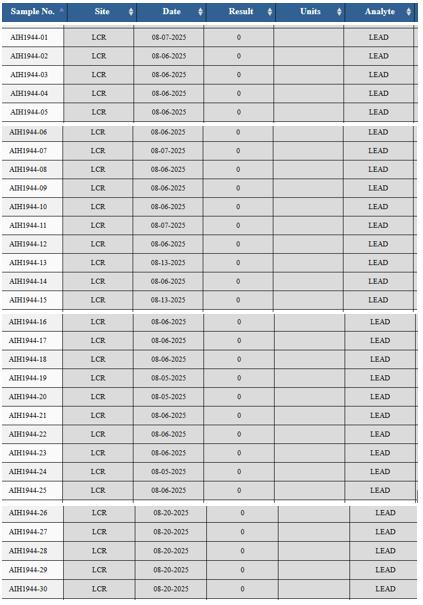
California Drinking Water Watch
Don’t worry, be happy? MCWD’s 30 tap samples show no lead However, there are a number of problems with this protocol.
First, there is the sheer scale of the system. The Marina Coast Water District reported managing 11,207 active water services in FY2025. A conservative estinate of five taps per service line suggests a regional network of roughly 56,000 individual taps. MCWD’s lead compliance profile relies entirely on monitoring just 30 residential indoor taps to represent the safety of this entire footprint.
Second, “Sampling sites must be selected from the highest tier available (Tier 1 is the highest tier and Tier 5 is the lowest tier)... “ But Tier 1 sites are single family homes. If all the sampling sites are Tier 1, testing will not include the university or student housing which are Tier 2 or lower.
Third, the sites' findings are averaged together, so a high number at one location, when averaged with the other locations, can result in a total average that is below the Action Level of 15 ppb.
This is a fundamental diagnostic failure. If an expert panel of environmental engineers and water quality specialists had designed a protocol with a genuine intent to uncover systemic risk, knowing the proclivity of lead to leach from antiquated plumbing, they would have prioritized the highest-risk facilities across the district. As they analyzed regional infrastructure, they would have cross-referenced the area's oldest building stocks, selecting not only Fort Ord's mid-century military buildings, but also Monterey Bay Military Housing neighborhoods like Fitch Park, Hayes Park and Stilwell Park, believed to have been built by the Army in the 1950’s. The water district might have included the East Campus Apartments, which were left off CSUMB's lead-sampling list.
Since the sample locations are supposed to be the most at-risk locations, who is in charge of selection and oversight? And is there an audit of the process?
This restricted testing pool explains why official utility district reports show no issues, even as CSUMB’s localized campus-wide testing found detectable lead concentrations in 69% of the 707 institutional taps evaluated. What's worse, every single one of those campus tap detections exceed California’s health-based Public Health Goal (PHG) for lead of 0.2 µg/L. Furthermore, the university's internal spreadsheets document 92 distinct tap results at or above 5 µg/L—a concentration that breaches Canada’s maximum acceptable safety threshold for drinking water.
Instead, by systematically bypassing obvious vulnerable housing and restricting normal compliance sampling to standard, single-family residential homes, MCWD's model likely omits the sprawling campus networks, ancient Army housing, and industrial sites from its baseline safety pool, guaranteeing a clean agency record, and making the state university’s lead crisis completely invisible in state databases.
EPA guidance explicitly dictates that municipal water systems should utilize available internal data from localized institutional facilities that are uniquely vulnerable to leaching when designing their compliance sites. But MCWD must give priority to Tier 1 – single family homes – per federal rules.
What's worse, by relying strictly on the Lead and Copper Rule 15 µg/L Action Level to issue public reassurances, CSUMB administration misleads the public by by papering over known lead contamination on campus with technical compliance reports written by MCWD.
The Regulatory Gap: Health Goals vs. Enforcement
This institutional defense mechanism is reinforced by a disconnected regulatory framework. For instance, in October 2023, Governor Gavin Newsom vetoed Assembly Bill 249—a legislative effort that would have established a state 5 µg/L action threshold, requiring community water systems to test K-12 campus sites, notify parents, and shut down contaminated taps. Rationalizing his decision as due to administrative implementation costs, Newsom's veto allows public entities to legally hide behind much more lenient and unsafe, federal standards. However, if he had signed AB 249, it would not have helped the university.
This lenient enforcement directly contradicts independent public health science and California's own Public Health Goal of 0.2 µg/L in drinking water.
Even the federal EPA sets its non-enforceable health goal for lead at absolute zero, recognizing that no level of heavy metal ingestion is biologically safe.
Furthermore, the binding Lead and Copper Rule evaluates water safety using a grouped, system-wide average rather than auditing the safety of individual building fixtures.
Because a severe spike at a single student tap is added to all the data collected and then an average value derived for the whole system – dilution by averaging -- high localized concentrations will fail to trigger federal remediation orders. This allows the university to appear to be/maintain a status of legal compliance despite actual individual campus tap contamination that is widespread.
Deeds, Transfers, and the Liability Loophole
The structural history of the campus reveals how multi-agency agreements created today's accountability vacuum. Historically, the military downplayed infrastructure risks; the Army told local newspapers in 1985 that no test results showed Fort Ord’s water to be unsafe. Following the base closure, the state established the Fort Ord Reuse Authority (FORA) in 1994 to manage the civilian transition. The Marina Coast Water District began operating the base's water network in 1997 under an agreement with FORA though the Army still held title. This ended in a rapid asset transfer in October 2001, when the Army officially quitclaimed the water system to FORA, which immediately transferred ownership to Marina Coast Water District (MCWD) the following day.
While these property deeds transferred the broad utility systems, the precise legal and physical boundary for day-to-day operations is defined under Section 3.04 of the Marina Coast Water District Code. This regulatory provision explicitly limits the utility's ownership and maintenance of water service connections to the pipes, valves, and facilities running from its distribution mains strictly to the meter and meter box.
Under standard water industry regulations and California property law, everything downstream of that delivery meter, including the internal campus networks, lateral extensions, and interior building plumbing, reverts entirely to the Board of Trustees of the California State University (CSU).
This handover created a fractured regulatory landscape. While the overarching Army-FORA agreement dictates that the federal government retains certain long-term environmental liabilities linked to its historical military activities, campus parcels began transferring to the CSU system as early as 1994—years before the definitive 2000 federal agreements were inked. Because deed records vary wildly from building to building, chronological dates alone cannot cleanly settle who is legally liable for an individual toxic tap.
Consequently, if an environmental investigation proves that a campus-owned faucet or interior pipeline is the source of leaching, the CSU Trustees are legally expected to fund and arrange its repair. Determining whether the Army or an intermediary shares that financial liability requires an exhaustive forensic title search of specific parcel documents to audit who knew about the plumbing hazards and when.
This administrative division creates an alarming public health gap: under weak federal rules, if an individual faucet in a student residence hall registers a dangerous concentration of 50 ppb or higher, the Lead and Copper Rule contains no legal mechanism that automatically forces the university to replace that specific tap.
The Internal Plumbing Catch-22
The laboratory data leaves students and faculty trapped in an infrastructural Catch-22. If a student drinks water immediately from an un-flushed tap, they will likely ingest high concentrations of lead leaching from stagnant, outdated internal fixtures. However, if they run the tap for 30 seconds to clear the faucet head, sequential "B" sample data across 41 separate campus buildings prove they are likely still drawing water laced with lead directly from the building walls. This deep-line contamination is structurally evident in facilities like the Science Research Lab Annex, the University Center, Chapman Science Academic Center, and Gavilan Hall, which all registered flushed "B" samples exceeding the 5 µg/L international safety ceiling.
Replacing individual contaminated faucet heads is a cumbersome, though straightforward logistical task. Yet, that substantial cost is entirely dwarfed by the massive capital expenditure required to tear out and replace the deeply embedded, Army-era supply lines responsible for these lingering "B" sample concentrations. By maintaining a policy of passive compliance with weak federal guidelines, the university successfully avoids a massive infrastructure remediation bill—shifting the biological cost directly onto the campus community.
Shower Safety: Lead vs. Volatile Chemicals in the Aquifer
There is one clear biological reprieve from the lead plumbing crisis: students may be able to shower safely. Lead filters are not necessary in showers, because according to explicit guidelines from the EPA and the Centers for Disease Control and Prevention, human skin does not absorb lead from water. Because lead does not easily penetrate intact dermal boundaries and cannot evaporate into hot shower steam as a vapor, routine showering poses no significant heavy metal health risk, according to the federal government, provided the water is not swallowed.
However, there may be a risk of exposure to trichloroethylene (TCE), a dangerous volatile organic compound (VOC) present in the regional groundwater. Water purveyed by the Marina Coast Water District has documented concentrations of ranging up to 1.5 ug/L. Unlike lead, TCE is highly volatile. When this contaminated water is heated during a shower, the chemical readily evaporates into the air, turning a routine shower into an active inhalation pathway. While this 1.5 µg/L concentration technically sits just beneath California’s public health protective goal (PHG) of 1.7 µg/L, it adds an entirely separate layer of environmental chemical exposure and health concern for the campus community.
Toxins in the air, too.
VOC’s like TCE, tetrachloroethylene (PCE), and carbon tetrachloride (CT) maintain a heavy presence in groundwater and are present under the former Fort Ord, creating a silent breathing hazard as they evaporate upward through the soil and penetrate concrete building foundations. Despite this well-documented atmospheric pathway, local authorities have systematically failed to perform proactive, comprehensive testing for these volatile indoor air compounds in buildings across the CSUMB community.
Survival Protocols: Taking Filtration into Your Own Hands
Predictably, campus insiders have already shared quiet concerns that the university administration will summarily reject the interpretation of these environmental findings. When cornered by public outcry, administrators are expected to point to the fact that they are fully compliant with current environmental law.
Students must bypass California’s institutional intransigence and install commercially available NSF/ANSI Standard 53 certified lead filters in their living spaces if they plan to drink the water. Several highly effective options are readily available online:
Aquasana AQ-5200 Under-Sink Filter: A robust multi-stage system that hooks directly under dorm or apartment sinks to selectively strip out 99% of lead alongside microplastics and PFAS.
Pur Plus Faucet Mount Filter : An affordable, easy-to-install option that snaps directly onto standard kitchen and bathroom faucets, utilizing activated carbon and ion-exchange mesh to drop lead below detectable levels.
Brita Elite Pitcher Filters: For students restricted by housing rules from modifying plumbing, these specific replacement filters are certified to remove 99% of lead from stagnant tap water, unlike standard baseline pitchers.
Of course, this all seems preposterous, but it is the frightening reality in which we live. The public must protect themselves, because institutional protections aren’t happening. People must learn from credible academic and non-profit sources of the environmental risks they face. The public must radically change its purchasing habits and living patterns. It’s a brave new dystopian world.
Academic rooms and labs experience sharp drops in water usage over weekends and breaks. Water sits entirely static inside embedded concrete utility risers for days or weeks at a time, accelerating lead accumulation. In addition to filtration, students and faculty are advised to follow these protocols:
Refrain from using tap water in any academic building on Mondays or following a university closure.
Before drawing water from any un-filtered tap, let the water run for at least 30 seconds or until it runs noticeably colder to manually flush away the high-concentration "first draw" volume. But even then, you will likely be still drinking poisonous lead from Army-era pipes
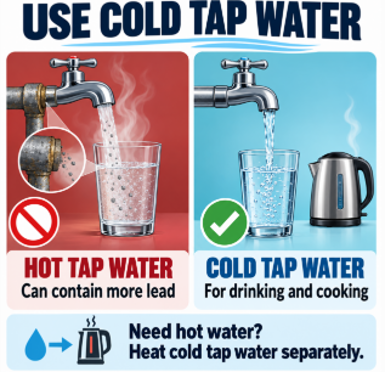
Never use hot water taps for drinking or cooking. Thermal acceleration actively speeds up the leaching of heavy metals from vintage pipes and internal solder points, compounding the danger.
If you wish to have your specific residence hall or workplace independently checked, contact the Marina Coast Water District directly at (831) 384-6131 to bypass university administrative inaction. Students may also ask MCWD in writing: “For this specific tap, will MCWD collect or arrange a lead sample? If not, where is the ownership and testing responsibility boundary, and what document establishes it?
Conclusion
The presence of elevated lead levels in the primary Dining Commons, residential halls, and the medical clinic intended to safely treat students, highlights a profound failure of institutional responsibility, transparency and administrative care. The lingering lead concentrations documented in these sequential "B" sample readings prove that the university's water crisis is not a superficial fixture issue; rather, it is a deep, systemic infrastructure failure that cannot be washed away by simply running the tap. As long as CSUMB administrators choose to utilize the 15 µg/L regulatory loophole to claim compliance, individuals must treat the campus plumbing network as an active exposure risk and aggressively safeguard their own biological health through direct, independent filtration. Ultimately, medical science remains absolute: no level of lead in drinking water is safe.
———————

Adressing an audience about contamination from Ramstein Air Base in Kaiserslautern, Germany on June 29, 2018,
For years, this newsletter and the investigative work behind it have been driven by uncovering the truth through independent testing around the world.
At 71 years old, I am still working 40-hour weeks dedicated to this cause, and it costs about $500 out of pocket every month to maintain this research and email distribution. Up until now, my wife, Nell, and I have absorbed these costs ourselves. However, I have promised Nell that I will stop spending our retirement savings to fund this work. I honor her, and I intend to keep that promise.
This means that if I cannot raise the necessary funds, I will stop sending the costly emails.
Right now, I am working closely with the parents of college students at CSUMB who are battling cancer, along with retired Army personnel, local leaders, and state officials who inform my writing and rely on these findings to push for accountability.
Last month we reported that 15 present and former students are suffering or have died from cancer. The local media refused to cover the story.
If you value this research, if you believe that communities deserve clean water, and if you want to support additional independent testing that protects students and families, please make a contribution today. Your help is urgently needed and will directly fund these vital investigations and determine whether we can keep uncovering the truth together.
Thank you for standing with me all these years. Please donate here.