Fort Ord Test Results
By Pat Elder
December 5, 2025
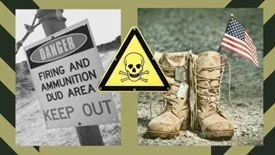
A team of veterans and environmental activists concerned about contamination at the former Fort Ord spent three days at the end of September testing water and air for volatile organic compounds. We have received the results and analysis of this testing regime. In general, the water and air meet federal standards. However, there were concerning levels of trihalomethanes (THMs) in some drinking water samples. Denise Trabbic-Pointer, a Certified Hazardous Material Manager Emeritus will explain below.
We also took water samples at 18 locations that were intended to measure the concentrations of per-and polyfluoroalkyl substances, (PFAS). We shipped the samples to the wrong location in Chicago.
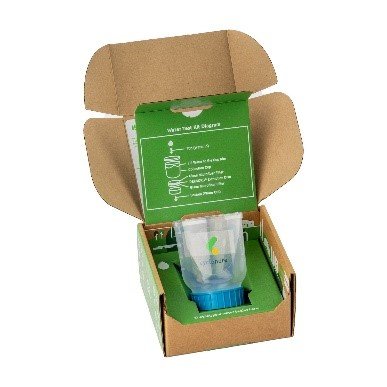
A Cylopure Test Kit is shown here.
Cyclopure is an American analytical firm specializing in PFAS detection using its proprietary DEXSORB® adsorbent technology. The company offers one of the lowest-cost PFAS water-testing programs in the United States. I’ve used their kits in hundreds of location around the world.
I like Cyclopure and their product, but, somehow, Cyclopure and UPS teamed up to lose our 18 PFAS samples. One of the UPS labels I was provided apparently had an address of Skokie, Illinois. Earlier this year the firm moved from Skokie to Evanston, Illinois. UPS failed to forward it to Cyclopure’s current office. UPS reports that our package of 18 test kits was delivered on 10/09/25 to a facility in Hebron, KY. This is where packages go to die. UPS launched an investigation and could not find our valuable box in their hell hole.
We are grateful that Cyclopure has agreed to ship us new kits at no charge, and we are gearing up to perform the testing early next year.
Testing for Volatile Organic Compounds (VOC’s)
We used VOC air testing kits by the firm Chemical Badges. The test covers more than 100 volatile organic compounds in the air. We also used Tap Score’s VOC Water Test Kits. Over 60 Volatile Organic Compounds are covered by these tests, including Carbon Tetrachloride, Tetrachloroethylene, (PCE), Trichloroethylene, Vinyl Chloride, Benzene, etc.
The Chemical Sensor Vapor Monitor can be used either as a personal exposure badge—worn near the breathing zone—or as a stationary sampler to measure indoor air concentrations. We used the monitors outdoors, although results must be interpreted cautiously. These badges rely on natural diffusion through a microporous membrane, which assumes relatively stable temperature, humidity, and air movement. Outdoor conditions can alter sampling accuracy. We placed the badges in protected, shaded, well-ventilated locations. While the device will still collect vapors, outdoor concentrations are often lower than indoor air. See the results here.
Denise Trabbis-Pointer CHMM Emeritus
2025 Sample Event – Review of Results
November 27, 2025
Summary of Review Findings
We tested the air and water at 40 locations on or near the former Fort Ord in the fall of 2025. In general, the water and air meet federal standards. However, there were concerning levels of trihalomethanes (THMs) in some drinking water samples. THMs are a universal problem and are a byproduct of water treatment with disinfectants like chlorine in a reaction with organic matter. The regulatory limit for Total THMs is 80 ppb and our highest result was 58.6 ppb from a restroom in a Starbucks in Del Rey Oaks. Del Rey Oaks gets its drinking water from the Marina Coast Water District where reported levels of THMs are well below regulatory levels. However, THM levels can continue to rise as the drinking water travels through pipes to residential homes and businesses. Health hazards from levels below regulatory limits could cause symptoms like dizziness and headaches, while long-term, high-level exposure above regulatory limits may lead to more serious outcomes such as damage to the liver, kidneys, and central nervous system. If you are concerned about THMs in your drinking water, an activated carbon filtering system or reverse osmosis will treat THMs and other contaminants from your drinking water. If you want to know more about THMs and how to protect yourself, the Massachusetts Department of Environmental Protection (Mass DEP) provides information and guidance in the pamphlet at this link.
Chloroform was found in two water samples as part of the THM analyses. One was collected from the Starbucks in Del Rey Oaks where water is provided by the Marina Coast Water District and the other was collected from a Toro Park home where water is provided by the Salinas Valley Water District. The groundwater source for both water treatment plants includes the 400-foot and 180-foot Salinas Valley Aquifers and indicates that the aquifers could be impacted by chloroform. This needs to be further investigated by responsible parties.
We also tested for volatile organic compounds (VOC) in ambient air by using passive badges that were placed in various strategic, mostly outdoor, locations near and around Fort Ord. All results were well below regulatory limits, including California’s residential and general exposure guidelines for chronic daily inhalation of 2,400 ppb. However, the levels of methanol we found were higher than the national expected average. Our results ranged from 52.71 ppb to 77.81 ppb vs an annual average of methanol in urban area of 30 ppb. One sample indicated 98.1 ppb from an indoor air sample collected in the Michaels store on General Stilwell Dr, in Marina. The health hazards from short-term overexposure to methanol includes irritation to the nose, throat, lungs, and central nervous system effects such as headache, dizziness, and confusion. Chronic exposure may result in visual disturbances like blurred vision. It is difficult to avoid breathing methanol in ambient or indoor air, even in the workplace environment. Ventilation systems that remove indoor contaminants to outside air are the best way to reduce levels inside the home but most home ventilation systems include return air and therefore, contaminants can build up inside the home. Regarding the source of higher than average levels of methanol, our research concluded that one possible reason could be from contaminated groundwater plumes underlying Fort Ord and volatilization into outdoor and indoor air. This is known as vapor intrusion and is explained by the EPA at this link. It is important to note that we could not find information or data that shows the presence of methanol in groundwater at Fort Ord and methanol has never been listed as a chemical of concern. More research and testing of groundwater is needed to confirm or deny the presence of methanol in groundwater and in ambient and indoor air.
Detailed Review Findings
The following is a more detailed review of the findings from the September 2025 Fort Ord area sample event.
Badge Results
Given the distribution and similar levels of Toluene, it appears that toluene is basically “background” and most likely from automobile emissions. There are health hazards associated with inhalation of toluene but this area near Fort Ord (FO) is not outside the national average of ambient levels of toluene (1 to 35 parts per billion by volume (ppbv). 1 Our results for Toluene are from 2.16 ppb to 5.71 ppb.
Similar to toluene, detected Xylene results of 2.39 ppb and 2.16 ppb could also be from automobile emissions. Because both toluene and xylene are detected and most other samples did not include xylene, there is a possibility that the detections in these two samples could be partly due to groundwater contamination. The area where these 2 samples are located was the most highly impacted area of Fort Ord, Site 2/12. It is difficult to determine because there is little data available regarding these two chemicals in groundwater at FO. Historically there was soil clean-up where petroleum products like benzene, toluene, ethylbenzene, and xylene (BTEX) was analyzed in soil but once the soil was removed, none of these chemicals have been analyzed in groundwater.
The one hit (4.39 ppb) of Ethyl Acetate is from a sample collected near the Marina Airport Fire Station and downwind of the airport. There are many likely sources of ethyl acetate near an airport including airport-specific industrial operations (such as paint and lacquer manufacturing), ground-based vehicle emissions from both aircraft and service vehicles, and the use of consumer products like glues, inks, and cleaning agents. 2
The results that include Methanol are relatively consistent but the source is uncertain. The levels are higher than the annual average in the US. Annual average of methanol levels in ambient air are reportedly < 10 ppb in rural areas to around 30 ppb in urban areas. Badge results from this sample event indicate levels from 52.71 ppb to 77.81 ppb in ambient air and 98.1 ppb from an indoor air sample from the Michaels store on General Stilwell Dr. in Marina. Methanol levels in ambient air greater than 50 ppbv are significantly elevated compared to typical background. Typical ambient air concentrations of methanol range from hundreds of pptv in remote areas to tens of ppbv (thousands of pptv) near surface sources or in urban environments. Levels exceeding 50 ppb are highly unusual for general outdoor ambient air and indicate a strong, proximal source. 3
Methanol in ambient air can come from vehicle exhaust; burning fuel, particularly ethanol-blended fuels; burning wood, and other biomass. The ocean is thought to be a net sink for methanol, and there are some emission processes involved but not to be of significance. Methanol can be produced in the atmosphere through the reaction of the methyl peroxy radical (CH3O2) with the hydroxyl radical (OH). The methyl peroxy radical is formed from reactions involving methane and oxygen in the atmosphere. Detections of methanol from our project are fairly well distributed (See Figure 1 orange icons) and not concentrated in high volume traffic areas so none of these appear to be the major source of methanol. Methanol in groundwater in the A-aquifer and upper 180-foot aquifer is a possible source. The badge data could be explained by volatilization to outdoor and indoor air from groundwater contaminated with methanol. Methanol is extremely volatile and is completely miscible in water because both are polar molecules that can form strong hydrogen bonds with each other. The problem is that we don’t have data that indicates levels of methanol in groundwater at or near Fort Ord that I could find. At this point in time I would suggest that, since the groundwater is a possible source of elevated methanol in ambient and indoor air, we can theorize that methanol is present in GW and it is up to those responsible to prove otherwise. Methods exist to test both ambient and indoor air for methanol. Proximity to groundwater treatment systems could be a factor as well. Treatment of methylene chloride in groundwater, which we know is an issue at Fort Ord, can lead to methanol emissions.
Inhalation of methanol can cause a variety of health hazards, including irritation to the nose, throat, lungs, and central nervous system effects such as headache, dizziness, and confusion. High-concentration exposure can lead to more severe symptoms like nausea, vomiting, loss of consciousness, and even death. Chronic exposure may result in visual disturbances, including blurred vision and blindness, and damage to the liver, kidneys, and nervous system. 4 As with most exposures to ambient air hazardous pollutants, some populations are more susceptible to health impacts at lower levels. This includes children, the elderly, people with preexisting conditions or people with immune deficiency disorders. In the workplace, exposure to methanol can be a significant concern. Because of its high vapor pressure, it easily travels to the worker breathing zone and regular carbon filter respirators that are protective for most other solvents, are ineffective to protect from methanol because it is such a small molecule and travels through the carbon granules. Breathing air is the only way to assure workers are protected and that poses its own complications in a manufacturing facility.
The Regional Screening Level (RSL) for methanol in residential air is 21,000 ug/m3 = 16,025 ppb. California's OEHHA (Office of Environmental Health Hazard Assessment) residential and general exposure guidelines for methanol is 2,400 ppb for chronic daily inhalation. None of our results for methanol are above guidelines. The acceptable limit for methanol in the workplace is 200 ppm or 200,000 ppb for an 8-hour period. 5
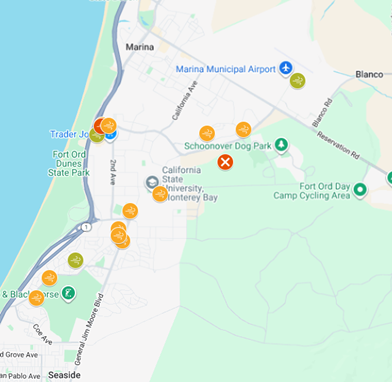
Figure 1 – Orange icons indicate badge results that include Methanol
Many of the sample results for VOC in water include trihalomethanes (THMs). THMs in the environment are primarily through a reaction between chlorine disinfectant and natural organic matter. That’s why they are prevalent from drinking water treatment plants and from treated wastewater discharges. Health hazards of trihalomethanes (THMs) include a possible increased risk of certain cancers, such as bladder and colon cancer, and potential adverse reproductive outcomes like spontaneous abortion and birth defects. Short-term exposure can cause symptoms like dizziness and headaches, while long-term, high-level exposure may lead to damage to the liver, kidneys, and central nervous system. 6,7 Exposure can occur through drinking, inhalation during showering, or skin absorption. Environmental legislation regarding the presence of THMs in drinking water is becoming increasingly restrictive. In accordance with current regulations, the need to control the concentration of these compounds in water for human consumption is established, since their presence can cause serious damage to human health.
Drinking Water Sample Results
Trihalomethanes (THMs)
The following Table 1 shows the highest levels found in our study for total and individual THMs, compared to California Public Health Goals and Environmental Working Group (EWG) guidelines. Water treatment facilities in California consider California Public Health Goals (PHGs) because the state requires the State Water Resources Control Board (SWRCB) to set Maximum Contaminant Levels (MCLs) as close to the PHGs as is both technically and economically feasible. While PHGs themselves are non-enforceable health goals based solely on public health, they serve as the benchmark for the SWRCB to establish the enforceable MCLs that water treatment facilities must meet.
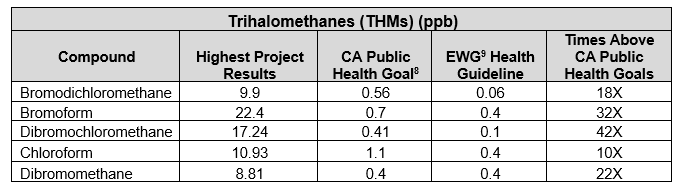
The water sample with the highest results of all individual THMs except chloroform was collected in the Del Rey Oaks Starbucks men’s restroom. Del Rey Oaks reportedly gets its drinking water from the Marina Coast Water District (MCWD). The Marina District provides groundwater produced from seven wells delivered through a distribution system network of eight storage tanks and nearly 215 miles of water main pipeline. Two deep supply wells (10 and 11) located in Central Marina, draw groundwater from the 900-foot aquifer in the Salinas Valley Groundwater Basin where the water is then treated on-site for disinfection. The remaining five supply wells (29, 30, 31, 34, and Watkins Gate) located in the Ord Community, draw groundwater from the Salinas Valley Groundwater Basin’s 900-foot, 400-foot, and lower 180-foot aquifers. Groundwater from these supply wells is disinfected in the Ord Community chlorination treatment facility. The most recent MCWD consumer confidence report (CCR) 10 indicates that THMs are below criteria. Chloroform is not mentioned in the report and there is no chloroform MCL.
The second highest THMs and the highest chloroform result was collect in a Toro Park home in Salinas, CA. Salinas’ city water is a blend of sources, primarily groundwater, that are treated by California Water Service (Cal Water) and the Salinas Valley Water District (SVWD). SVWD reports that they are in compliance with THM MCL level of 80 ppb and that the highest average level of total THMs = 1.6 ppb. Cal Water’s CCR also reports that they are in compliance with total THMs with the highest average = 1.9 ppb.
The question is then, why are levels of individual and total THMs where samples were collected in this project so much higher than what they are finding at the source water treatment plant? This is primarily because of reactions that continue to occur after the water leaves the plant. Key factors include chlorine continuing to react in the pipes, the water's stagnation in the plumbing system and hot water tank, and the higher temperatures of household hot water.
Low levels of toluene and xylenes were found in a three samples but are not of any concern or consequence. The MCL for xylene is 10,000 ppb and all results were below 0.3 ppb.
In homes, activated carbon or reverse osmosis filtration systems will reduce THMs as well as other harmful
contaminants. 11
Chloroform
As mentioned above, the Toro Park sample with chloroform indicated at 10.93 ppb is from the combined California Water Service (Cal Water) and the Salinas Valley Water District (SVWD). The Starbucks sample was from the Marina Coast Water District at 9.03 ppb chloroform. The source of groundwater for Cal Water, SVWD and MCWD is the Salinas Valley 180/400 Foot Aquifer and the Salinas Valley – Upper Valley Aquifer. The fact that the groundwater source for both Marina Coast Water Division and Salinas Valley Water District is the same Salinas Valley aquifers (180/400 foot), indicates that the aquifers could be impacted by chloroform. There is some evidence that there is Tetrachloroethylene (Perchloroethylene). This is not verified but Epic Water Filters states that “3rd party independent testing found that this water utility exceeds health guidelines for this drinking water contaminant.”
Footnotes
1 Analysis of BTEX in ambient air using gas chromatography flame ionization detector to assess health risks. Ahmad Zarei-chargoud et al… December 2024. https://doi.org/10.24200/amecj.v8.i01.1028
2 Australian Government Department of Climate Change, Energy, the Environment and Water. Industrial sources of Ethyl Acetate.
3 Sources and seasonality of atmospheric methanol based on tall tower measurements in the US Upper Midwest. L. Hu et al…2011. doi:10.5194/acpd-11-17473-2011
4 EPA Methanol document: https://www.epa.gov/sites/default/files/2016-09/documents/methanol.pdf
5 Federal OSHA PEL. ACGIH TLV. NIOSH REL. California OSHA PEL
6 Tap Water and Trihalomethanes: Flow of Concerns Continues. E Hood. Environ Health Perspect. 2005 Jul;113(7):A474. PMCID: PMC1257669.
7 Total Trihalomethane In Drinking Water Information for Consumers Fact Sheet. Massachusetts Dept of Environmental Protection (MassDEP)
8 Public Health Goals (PHGs) published by Office of Environmental Health Hazard Assessment (OEHHA) are for use by the State Water Resources Control Board (SWRCB) in establishing primary drinking water standards (State Maximum Contaminant Levels, or MCLs). Whereas PHGs are based solely on scientific and public health considerations without regard to economic considerations, MCLs adopted by SWRCB consider economic factors and technological feasibility.
9 "EWG health guidelines" are not a third-party certified system in the traditional sense; they are the internal health and transparency standards developed by the Environmental Working Group (EWG).
10 Marina Coast Water District consumer confidence report. 2024
11 Total Trihalomethane In Drinking Water Information for Consumers Fact Sheet. Massachusetts Dept of Environmental Protection (MassDEP)
—————————————
Author Qualifications
Denise Trabbic-Pointer is a Chemical Engineer with a BS and MS in Hazardous Materials Management, a career EHS professional and a Certified Hazardous Material Manager Emeritus. Denise retired in January 2019 after 42 years with DuPont. The last 7 years of her career were with a spin-off company, Axalta Coating Systems, as their Global Environmental Competency Leader. As it specifically relates to the topic of existing hazards to the residents in and near the former Fort Ord site and their related health risks, Ms. Trabbic-Pointer was an occupational health manager for more than 30 years. In that role, she trained employees and facility first responders on the hazards of the chemicals that they worked with and encountered and how to properly protect themselves. For 35 years and as part of her role as an environmental manager, Denise managed a number of site clean-up and remediation projects. As a global environmental manager, she also reviewed numerous remediation projects, including review of proposed remedial methods as well as Phase I and II environmental impact statements (EIS) for possible acquisition. Since May 2019, Ms. Trabbic-Pointer has been the Sierra Club – Michigan Chapter, Toxics & Remediation Specialist, and volunteers nationally as a technical resource for communities impacted by releases of toxics to air, water and/or soil.
Please support our continuing work at Fort Ord. To make a contribution, please scroll to the bottom of this page: https://www.fortordcontamination.org/