Calculating Brunswick’s “Cleanup” Price Tag
By Pat Elder
December 9, 2025
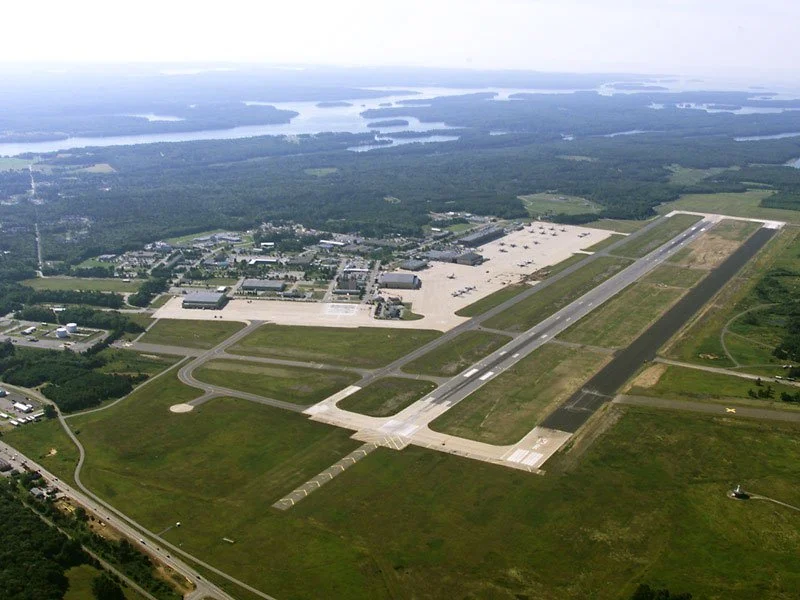
Brunswick is beautiful, but it is contaminated.
See the accompanying spreadsheet on treating groundwater and soil contamination. Cleaning up this part of the contamination could top $1.5 Billion.
See Final PFAS Investigation Summary Report, NAS Brunswick, ME 9/01/2020 Resolution Consultants.
The massive report spans 11,334 pages and may be found here.
This is a monster PDF, containing 11,334 pages. The best way to approach it is to search for specific items, like Suppression System, or Fire Training, or Hangar 4.
=============================
Virtual RAB Meeting, Former NAS Brunswick
The public is encouraged to participate.
December 9, 2025 - 6:00-8:00 pm
=============================
See the DOD’s most recent cost analysis, Report on Active, National Guard, and Formerly Used Defense Sites Per- and Polyfluoroalkyl Substances Cleanup Costs, January, 2025.
The Navy at Brunswick West and Brunswick East allocated $0 for investigation and cleanup of PFAS in 2024 and they have allocated $0 for investigation and cleanup after FY 2024. Although the Navy and its lackies will claim this isn’t a fair comparison, Whidby Island NAS in Washington State spent $21 Million cleaning up PFAS in 2024 and has allocated $32 Million after that. Puget Sound, Washington allocated $19 Million last year. It’s not a fair comparison because the press in Washington state has been relentless with their investigations while the state’s congressional delegation is unrelenting.
Neither Whidby nor Puget Sound have been subjected to the apocalyptic spill Brunswick endured on August 19, 2024 when PFOS with a concentration of 3.2 billion parts per trillion (ppt), and total PFAS of 3.78 Billion ppt bubbled out of Hangar 4. Search “Hangar 4” and you find 60 hits. It’s quick to go through it.
Hangar 4’s spill on August 19, 2024 is believed to be the highest concentration of PFAS ever known to have entered the environment anywhere on earth, aside from Red Hill, Hawaii, and Kadena Airbase in Okinawa, Japan. Still, it is dwarfed by the total of all of the mostly chronic, ongoing releases at Brunswick since the early 1970’s.
The Navy should not be able to “talk a good talk, move some dirt around, plant some grass seed, and call it a day,” as one congressional staffer remarked, predictably, off the record.
Brunswick has been gobsmacked. At least 38 separate areas on base released PFAS, perpetually contaminating soil and groundwater. Another 10 surface water bodies have been horribly contaminated, along with their sediment, banks, and all aquatic life they hold which make up the very building blocks of the food chain.
The Brunswick Sewer District Wastewater Treatment Facility acts as a conduit for PFAS before the carcinogens enter the Androscoggin River. The PFAS report from 2020 mentions the treatment plant three times, all related to AFFF foam use. There are many hundreds of products and application used in hangars and machine shops that don’t have anything to do with AFFF. They also contribute to the waste stream. See the DOD’s August 2023 Report on Critical Per- and Polyfluoroalkyl Substance Use.
Site 1 Landfill, Site 3 Landfill, and the Orion St Landfill are loaded with PFAS. They have contaminated the soil, groundwater and various streams forever. The cost of cleanup is in the tens of millions of dollars. And there’s only so much we can do.
The 2020 report says more than 20 times that PFOS is not volatile (meaning it does not lift into the air) and that is true, but there is so much more to it. Although PFOS itself is not volatile, several of its precursors, including the fluorotelomer alcohols 6:2 FTOH, 8:2 FTOH, and 10:2 FTOH, and the sulfonamide-based compounds FOSA, MeFOSA, EtFOSA, MeFOSE, and EtFOSE, are volatile or semi-volatile. These airborne precursors can migrate through indoor air, dust, and soil gas where they gradually turn into PFOS. But the Navy doesn’t address them at Brunswick. The Navy knows PFOS cannot volatilize into the air, that it readily binds to fine organic particles and dust that do become airborne. In this form, PFOS is easily inhaled or ingested indoors, making dust one of the dominant exposure pathways in buildings with a history of AFFF use, and in homes outside of the perimeter of the naval facilities. Small children are most impacted.
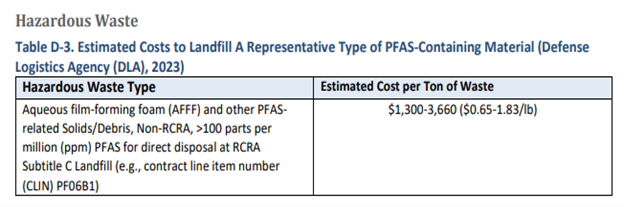
Disposal costs for PFAS-contaminated solids exceeding 100 parts per million range from $1,300 to $3,660 per ton. See: EPA, 2024 The middle range is about $2,500 so we’ll use that to estimate costs. The EPA guidance explains that several major cost drivers apply broadly across PFAS-waste disposal, which helps explain why lower-concentration solids face very similar per-ton costs.
Maine does not have its own commercial RCRA Subtitle C hazardous-waste landfill, and that’s good. You don’t want one. The EPA’s Resource Conservation and Recovery Act (RCRA) homepage starts off this way, “RCRA gives EPA the authority to control hazardous waste from the "cradle-to-grave." There’s no grave for PFAS! Dracula was supposed to die by staking through the heart, decapitation, or burning, often combined with holy water, garlic, or sunlight, but he kept coming back. PFAS is a lot like this.
PFAS-impacted soils excavated at Brunswick might be shipped to Chemical Waste Management’s Model City, New York facility, which is the nearest operating commercial RCRA Subtitle C landfill.
Because disposal fees vary widely and are facility-specific, we will apply a conservative planning assumption of $2,500 per ton for Subtitle C disposal of PFAS-impacted soil. See: EPA, 2024 -Interim Guidance on the Destruction and Disposal of PFAS.
We’ll use a reasonable regional excavation cost of $40 per cubic yard as a baseline for removing uncontaminated soil. This value reflects typical unit-price ranges seen in Bangor, ME. gov public-works bid tabs, where common excavation routinely appears between $25–$40 per cubic yard, with higher outliers on small-quantity items.
For long-distance hauling of PFAS-impacted soil to Model City, NY (about 600 miles), we’ll use a transportation cost of $3.00 per mile for 20-ton trucks, which typically carry approximately 10 cubic yards of soil. This assumption is directly supported by the Minnesota Pollution Control Agency’s 2023 PFAS management cost modeling, which states: “Using a transportation cost of $3/mile for 20-ton trucks…” (MPCA PFAS Incineration Cost Study, p. 146). (Minnesota – p. 146)
One Truckload
Excavation: 10 CY x $40/CY $400
Disposal - Subtitle C: 15 tons × $2,500/ton $37,500
Transport: 1 load × 600 miles × $3/mile $1,800
Total for 10 CY $39,700
$3,970 per cubic yard under these assumptions.
GWETS
The Groundwater Extraction and Treatment System (GWETS) at the former NAS Brunswick was established in 1992. When PFAS investigations began at Brunswick, PFOS and PFOA were found in frightening levels in groundwater within the Eastern Plume. In response, the Navy modified GWETS in 2015 to incorporate treatment processes capable of removing both volatile organic compounds and PFAS. The Navy now has 7 extraction wells operating over the Eastern Plume.
Although the Navy likes to talk about GWETs, the system does not address PFAS present in soil, surface water, sediments, landfills, stormwater, or other environmental media across the former base. And it only treats groundwater in one relatively small area of the base.
Brunswick’s GWETS, with just six extraction wells plus one added PFAS well, is small compared to the 50–100+ well pump-and-treat systems operating at many DoD installations.
At Stewart Air National Guard Base (NY), a recent DOD study evaluated a PFAS groundwater pump and treat system designed to pump 50 gallons per minute using an extraction trench and a treatment train incorporating SAFF and granular activated carbon. The estimated capital cost is about $5.6 million, with annual operations and maintenance around $1 million, yielding a 30-year net present-worth of approximately $33.9 million.
We will run with this by placing a pump and treat extraction well at each of the locations identified on base with dangerous PFAS levels in groundwater. Now let’s turn to the soils which are conveniently overlooked by the Navy. Think of impacted soils like a large sponge that perpetually squeezes out contaminants. We can “clean up” groundwater and surface water downgradient, but without cleaning the soils, it’s largely pointless.
Where PFAS-contaminated groundwater is present beneath a known AFFF release area, it is prudent to test shallow soils. When results confirm dangerous concentrations of PFAS we should excavate the top 3 feet of soil over an area on the order of 1,000 square feet, or as defined by the extent of contamination. Let’s run with 1,000 square feet, (31.6’ x 31.6’) for our projections.
Unlike the Eastern Plume addressed by GWETS, PFAS impacts at NAS Brunswick arise from multiple discrete source areas, including fire stations, hangars, and training grounds, distributed across the base (Building 225, Hangar 4, Landfill, Airport Apron, etc.) At each of these locations, PFAS-contaminated groundwater has been detected directly beneath known historical AFFF use. It is consistent with standard practice to conduct targeted PFAS soil sampling in the shallow soil zone at each source area and where elevated PFAS is confirmed, remove the soil.
We will assume that PFAS is confirmed at each of the 38 locations identified in our cost projections spreadsheet. If only we has access to Naval facilities! Many Japanese and the Germans seem to think they are the ones who are discriminated against because of their inability to gain unfettered access for scientific testing. It’s the same in Maine and Hawai’i and Maryland - and everywhere else.
==============================
1,000 square feet x 3 feet deep = 3,000 cubic feet
3,000 square feet / 27 = 111.11 cubic yards
111.11 cubic yards × $3,970 per cubic yard = $441,111.
===============================
It’ll cost $441,111 to remove 3 feet of soil from the 31.6’ x 31.6’ square patch of Mother Earth.
Now, let’s look at a site like Building 611. For areas like Building 611 with PFOS concentration of 220,000 ppt in soils at a depth of 9-10 feet, the cost is much greater. Let’s figure 1,000 square feet excavated down to 12 feet at a cost of $3,970 per cubic yard.
· 12,000 sq. feet / 27 = 444 cubic yards
· Cost at $3,970 per cubic yard: 444 × $3,970 = $1,764,000
This deep dig likely needs to happen all over the base. We must demand truly independent third-party testing. There’s so much at stake!
Excavating 444 cubic yards is within the scale of existing and planned PFAS source-removal projects. At the former NASJRB Willow Grove in Pennsylvania, the Navy’s Removal Action for PFAS in soil called for excavating more than 2,500 cubic yards of AFFF-impacted soil to depths of 4–6 feet.
Suppression Systems
According to the Brunswick former deputy fire chief, approximately two to three accidental releases from each building’s AFFF fire suppression system occurred. Causes of the accidental releases from the fire suppression systems were triggered by various methods, such as a lightning strike (Building 653), motion of a computer screen saver (Hangar 4), and inadvertently leaving the AFFF valve open during fire suppression system testing (Hangar 5). It’s the same all over the world!
Ask the folks in Ginowan City, Okinawa, Japan about AFFF mishaps. Marines at the Marine Corps Air Station Futenma decided to have a barbecue just outside of the hangar, and as soon as they lit a match, the thing went off. Massive carcinogen bubbles rained down on elementary schools and playgrounds.
The Marine is charge told the press, “If it rains, it will subside.”
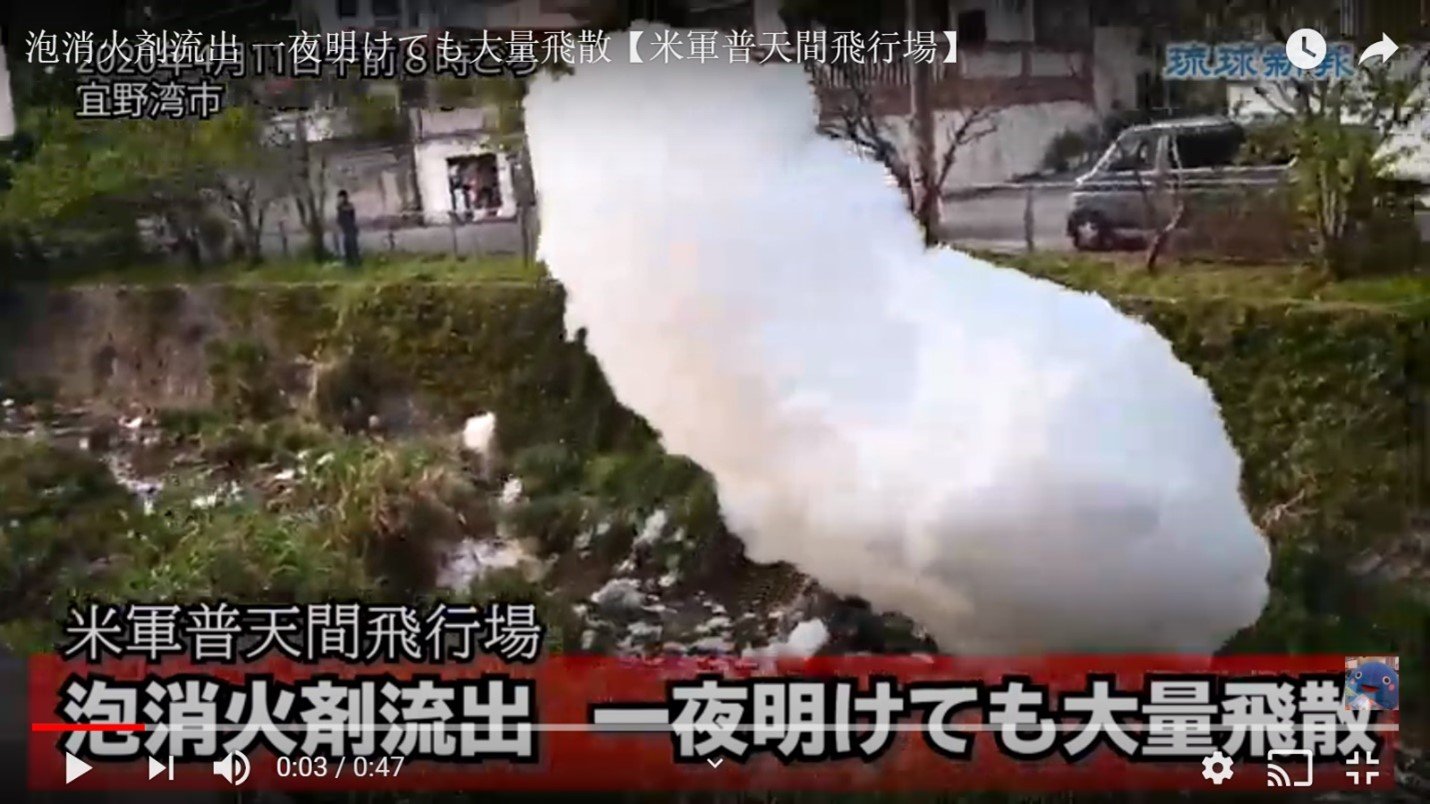
“Extinguishing foam leaks - Large amount scattered overnight.”
Fire truck maintenance
Fire truck maintenance at Brunswick included fully dispensing the contents of the AFFF tanks for each fire vehicle on a quarterly basis. The dispensing process including mixing AFFF with water during the dispensing and continued until the contents of the tank were empty. This would use approximately 3,000 to 5,000 gallons of water to empty the contents of each of the AFFF tanks.
The dispensing locations were selected by the Environmental Department, and were frequently one of six common locations. They included:
• The grassy area east of Taxiway Alpha and west of former Building 292;
• The grassy area west of Hangar 5 and east of Taxiway Alpha;
• The wooded area immediately south of the airport apron or in snow banks in this area during winter months;
• The grassy area behind a house (which has since been demolished) along the southern side of Alagash Drive;
• The grassy area west of Admiral Fitch Avenue nearest the main entrance to the former NAS Brunswick base and south of Alagash Drive; and
• The grassy/wooded area past the paved area at the Red Label Area.
Now, let’s look at the potential cost of “cleaning up” of a 200 foot by 3,000 foot swath of the soil and sediment in the Mere Brook – Upper Harpswell Cove watershed, even though the source of the contamination will continue largely unabated. We really can’t clean this stuff up. The best we can do is to ship it off to a state like New York that is happy to take it.
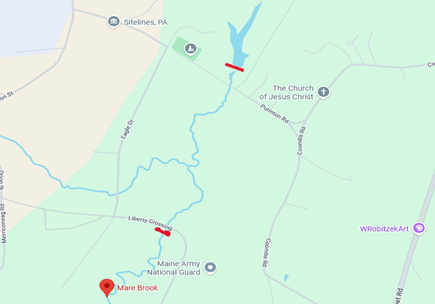
Between the red lines, imagine 200 feet by 3,000 feet along Mere Brook.
We will estimate the cost of removing PFAS soils and sediment from a 200-foot-wide swath along both sides of Mere Brook running about 3,000 feet from Liberty Crossing Road on the south to the southern edge of Picnic Pond. This would equal 600,000 square feet, or a little less than 14 acres.
It is likely more effective to focus first on the non-tidal stretches of Mere Brook and Merriconeag Stream, rather than the tidal marsh downstream. The non-tidal reaches are easier to access with excavation equipment, and contain the clearest source areas just below the deadly, historic Picnic Pond, and in slower bends of the stream.

Not much we can do for these critters.
Invertebrates living in PFAS-contaminated sediments bioaccumulate destructive levels of PFAS, known to cause DNA damage. What God put in play maybe 5 billion years ago is being undone by the devil. PFAS is sometimes referred to as “devil’s piss.”
I got this from a scientific journal that might be more effective communicating to us if they toned it down a tad: “High PFAS concentrations in sediment cause DNA damage and heritable epigenetic changes in benthic invertebrates, leading to reduced reproductive success, altered genetic structure of populations, and long-term ecological harm as these effects propagate through future generations.”
Damn, Sounds bad.
Of course, these genetic effects cascade upward to impact us.
The tidal marsh and mudflats at the head of Harpswell Cove represent a far more delicate environment where large-scale excavation would be substantially more expensive and pose a greater threat to the environment and various life forms.
Removing 3 feet from 600,000 square feet from one square mile of the sediment in the Mere Brook – Upper Harpswell Cove watershed
Volume (cubic feet) = Area × Depth
Cubic yards = Cubic feet / 27
600,000 x 3 = 1,800,000
1 cubic yards = 27 cubic feet
600,000 square feet × 3 feet down = 1,800,000 cubic feet
1,800,000 cubic feet / 27 = 66,667 cubic yards
· 66,667 cubic yards × $3,970 per cubic yard = $264,667,000
Notes from the Underground
Pat, The Navy will be humored by your work, esp your cost projections. That’s because you are no one in their eyes. But the public has never seen the listing of all impacted sites that need remediation, so it’ll strike a nerve.
Pat, I wouldn’t publish it. You need to examine contracts, bids, etc. first. Maybe file a FOIA and have others look at it.
================
Please support our continuing work at Fort Ord. To make a contribution, please scroll to the bottom of this page: https://www.fortordcontamination.org/