Student lived in former Fort Ord barracks; Researchers urge inquiry.
By Pat Elder
July 27, 2026

Student residences at CSUMB are situated above portions of the former Fort Ord, where chlorinated solvent plumes remain in the subsurface and questions have been raised about potential vapor intrusion into occupied buildings.
This report examines the environmental conditions surrounding one former California State University Monterey Bay (CSUMB) student, who was diagnosed with T-cell lymphoblastic leukemia after attending the university.
To protect the privacy of the student and his family, we use the pseudonym "Caleb" throughout this report.
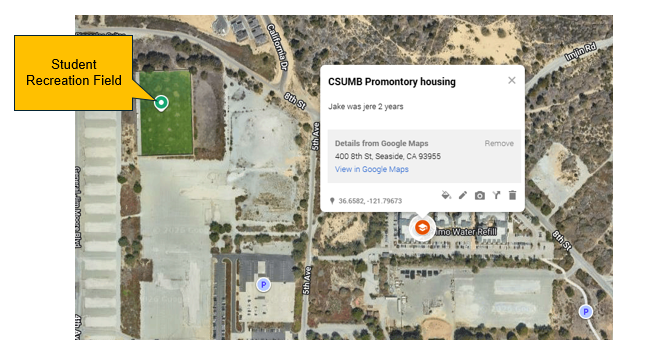
Caleb has been battling T-cell lymphoblastic leukemia. During his first year at California State University, Monterey Bay, he lived in one of the former Fort Ord brick barracks near the Student Union. As a transfer student, he attended CSUMB for two years. During his second year, he moved into Promontory Housing on 8th Street near Imjin Parkway.
Caleb was physically active and played intramural sports on the recreation sports field behind the promontory building, north of North Quad past 5th Ave. Because he both lived and recreated in these locations, understanding the environmental conditions in these areas is essential to evaluating the range of potential chemical exposures he may have experienced.
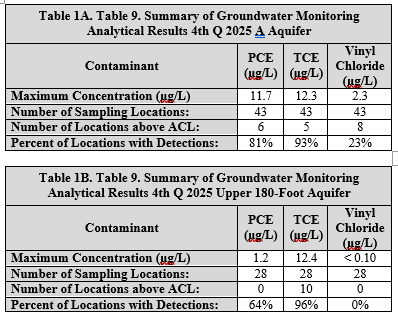
We know that Trichloroethylene, (TCE), Tetrachloroethylene, (PCE), and Vinyl Chloride (VC) levels in groundwater A-aquifer and Upper 180-foot were above criteria in 2014 and remain prevalent in 4th quarter 2025 in the area that includes the Promontory Housing where Caleb lived for 2 years. Tables 1A and 1B from document OU2-752 Fourth Quarter 2025 Groundwater Monitoring and Treatment System Report summarizes the current levels of PCE, TCE and VC in the two groundwater aquifers underlying Promontory Housing.
We know that these contaminants are likely impacting indoor air in buildings that are above the two underlying aquifers (A-Aquifer and the Upper 180-Foot Aquifer) and particularly from A-Aquifer.
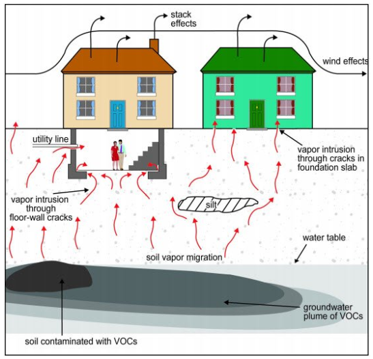
The diagram shown here is from EPA’s Migration of Soil Vapors to Indoor Air.
In their July 9, 2026 Health Evaluation of drinking water Former Fort Ord Army Base From 1985 to 1994 Report, the Agency for Toxic Substances and Disease Registry (ATSDR) stated that air sampling data from within and directly beneath buildings is needed to determine if vapor intrusion (VI) is occurring and to what extent.
Vapor Intrusion is the process by which chemicals from contaminated soil or groundwater enter the indoor air of a building.
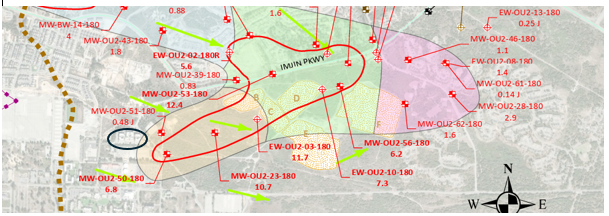
Figure 1 below is from the 2025 groundwater report and shows the general outline of the OU2 TCE and other contaminants of concern plume adjacent to and underlying Promontory Housing.
Figure 1. OU2 TCE Groundwater Plume in Proximity to Promontory Housing
We know that there are significant levels of PFAS in the Upper 180-foot aquifer in the Promontory Housing area (black oval).
See Figure 2 from the February 2020 OU2-722A Technical Summary Report — PFAS Basewide Review of Historical Activities and Groundwater Monitoring at Operable Unit 2 report with data from MW-OU2-23-180 highlighted below.
Figure 2. Promontory Housing and PFAS Levels in the Upper 180-foot Aquifer
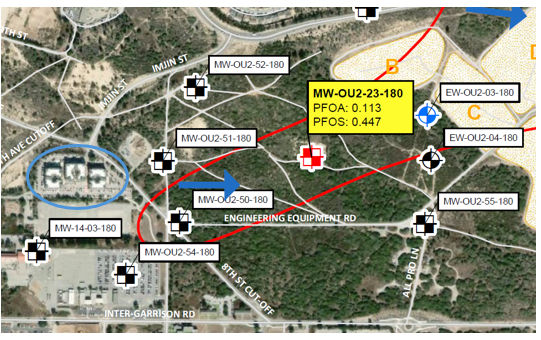
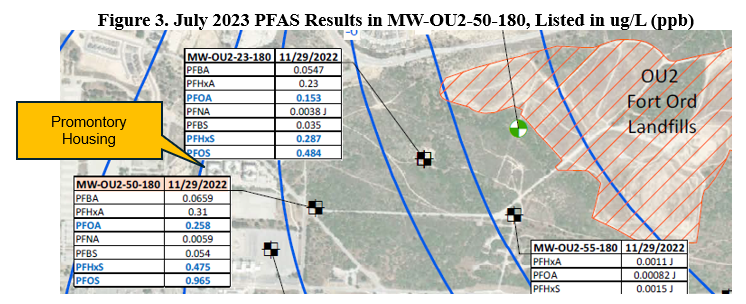
Table 2 below lists worst case PFAS results from the July 2023 BW-2942 Site Inspection Narrative Report PFAS detected in monitoring well MW-OU2-50-180, which is located in the Upper 180-Foot Aquifer and in close proximity to Promontory Housing as shown in Figure 3. These levels of PFAS are significant in groundwater after so many years.
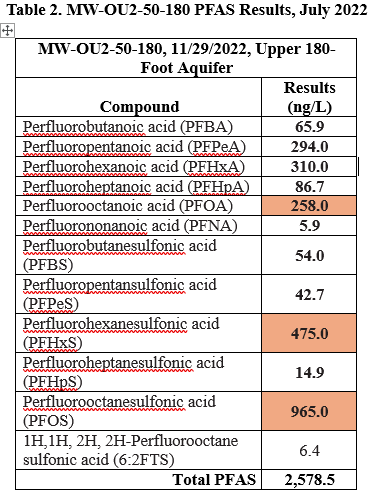
Figure 3. July 2023 PFAS Results in MW-OU2-50-180, Listed in ug/L (ppb)
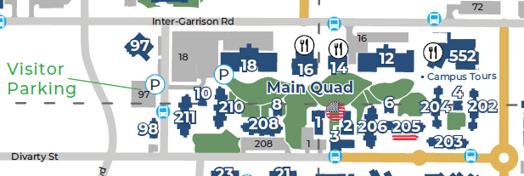
We don’t have sufficient information about potential underlying chemical contamination at the dorms where Caleb stayed his 1st year. The former Fort Ord Soil Testing Area (FOSTA) is the closest area of concern upstream of the dorms but was reportedly cleaned up years ago. No plumes are shown on any available maps that would indicate contaminated groundwater. The Fort Ord Team did collect a sample for volatile organic compounds (VOC) inside dorm bldg. 205 in 2025 and those results are shown in Table 3 below. A screenshot from a campus map is shown in Figure 4 and the approximate dorm location is circled.
None of these solvents are likely to have contributed to Caleb’s’s illness but any chemical exposures can assist in weakening a person’s defense mechanisms thereby allowing more chronic hazardous chemicals to cause long term damage.
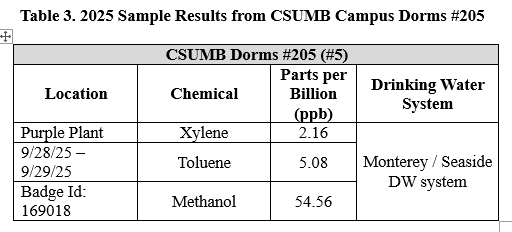
Figure 4. CSUMB Main Quad Dorms, Dorm 205 Where Caleb Stayed His 1st Year
Surface soils on the Student Recreation Field shown in Figure 5 where Caleb played sports, is suspected of being PFAS contaminated because of the CSUMB practice of using recycled water for irrigation. Airborne soil/particulates from upwind contaminated areas like the Fort Ord Soil Treatment Area, (FOSTA), is also suspected. We don’t know for certain if this Field has been irrigated with recycled water but even the Marina City Water has historically been impacted with PFAS and they are “forever” so it is likely that the surface soils at this Field contains PFAS. Samples should be collected in September 2026.
Figure 5. CSUMB Promontory Housing and Student Recreation Field
The Connection of Known Contaminants and Caleb’s Illness
While there is limited research directly linking Trichloroethylene (TCE) to T Cell Acute Lymphoblastic Leukemia (T-ALL), the U.S. EPA and IARC classify TCE as a known human carcinogen. Scientific evidence associates TCE with blood-related cancers such as Non-Hodgkin Lymphoma (NHL)[1] and various forms of leukemia[2].
There is an association between PFAS exposure and Acute Lymphoblastic Leukemia (ALL). There is a particular association between exposure to PFAS and lymphoblastic leukemia from prenatal and childhood exposures[3]. Consideration to exposures to PFAS though age 18 were considered in this study. So much remains unknown about PFAS and numerous illnesses and cancers that science is still catching up with the actual mechanism of exposure as it relates to illness. The cited study and others like it show a strong association between PFAS exposure and ALL.
There is an established but general relationship between vinyl chloride exposure and certain blood-related cancers, though the scientific literature does not strongly single out T Cell Lymphoblastic Leukemia specifically. Vinyl chloride is classified as a Group 1 human carcinogen. While its primary, most well-known link is to hepatic angiosarcoma (a rare liver cancer), it is also broadly associated with cancers of the lymphohematopoietic system, including leukemia and lymphoma[4].
Qualifications
My name is Denise Trabbic-Pointer. I am a Chemical Engineer with a BS and MS in Hazardous Materials Management, a career EHS professional and a Certified Hazardous Material Manager Emeritus. I retired in January 2019 after 42 years with DuPont. The last 7 years of my career were with a spin-off company, Axalta Coating Systems, as their Global Environmental Competency Leader. As it specifically relates to the topic of existing hazards to the residents in and near the former Fort Ord site and their related health risks, I was an acting occupational health manager for more than 30 years. In that role, I trained employees and facility first responders on the hazards of the chemicals that they worked with and encountered and how to properly protect themselves. For the same time period, and as part of my role as an environmental manager, I managed a number of site clean-up and remediation projects. As a global environmental manager, I reviewed numerous remediation projects, including review of proposed remedial methods as well as Phase I and II environmental impact statements (EIS) for possible acquisition. Since May 2019, I have been the Sierra Club – Michigan Chapter, Toxics & Remediation Specialist, and volunteer nationally as a technical resource for communities impacted by releases of toxics to air, water and/or soil.
[1] NIH. Sara Karami et al…, Occupational trichloroethylene exposure and risk of lymphatic and haematopoietic cancers: a meta-analysis. May 2013.
[2] ATSDR. Health effects linked with trichloroethylene (TCE), tetrachloroethylene (PCE), benzene, and vinyl chloride exposure, Camp Lejeune, NC. November 2024
[3] University of California, Irvine. Targeted and non-targeted analyses of PFAS in newborn dried blood spots and risk of childhood acute lymphoblastic leukemia. April 2026
[4] National Cancer Institute. Vinyl Chloride. June 2024.
===================
Independent environmental investigations are expensive. Laboratory analysis, sampling equipment, and travel costs quickly add up. If you believe this work should continue—and that communities deserve independent scientific scrutiny when official investigations leave important questions unanswered—we invite you to support our work. Your contribution will help fund field sampling, laboratory analysis, and the public release of our findings.
Go here, to the bottom of the page, to contribute. https://www.fortordcontamination.org/
See our database of nearly 2,000 former Fort Ord residents and their accompanying cancers and diseases, including 120 with various types of Leukemia. Caleb recently had his 90-day post-transplant appointment and we're cautiously optimistic as he undergoes another bone marrow biopsy.