About chemical contamination at Büchel Air Base in Germany
By Pat Elder
July 17, 2026

Photo of Susan Crane after she was released from prison in Koblenz, Germany in early 2025.
Susan Crane is an American peace activist, and a dedicated member of both the Catholic Worker movement and the Plowshares movement. Susan has spent decades engaging in civil disobedience aimed at dismantling nuclear weapons systems and highlighting the trillions of dollars wasted on global war-making rather than human needs.
Susan is currently helping to organize people and is speaking about the nuclear arsenal kept at Büchel Air Base in Germany. She reached out to me about chemical contamination, including PFAS contamination at the base.
Dear Susan,
It’s good to see you are still at it!
The contrast between environmental transparency at Büchel Air Base and many U.S. military installations is striking. German authorities have publicly acknowledged PFAS contamination in streams, soils, and fish downstream of the base, but little else.
Beyond PFAS, there is little publicly available information concerning historical investigations for chlorinated solvents such as trichloroethylene (TCE), perchloroethylene (PCE), petroleum hydrocarbons, or other contaminants like Benzene or Toluene commonly associated with military aircraft maintenance. Nor have authorities released the kinds of detailed technical records routinely available for many U.S. installations. At Joint Base Andrews near Washington, publicly accessible records identify hundreds of individual sampling locations, monitoring wells, soil borings, groundwater plumes, contaminant concentrations, analytical methods, and decades of investigations covering PFAS, petroleum products, chlorinated solvents, and other hazardous substances.
Similar records exist for numerous U.S. bases through the Department of Defense's environmental restoration program. At Büchel, by comparison, the public has access to only a small portion of the environmental record, making independent scientific evaluation difficult to evaluate the full extent, history, and potential health significance of contamination.
Per- and polyfluoroalkyl substances (PFAS) are a large class of highly persistent synthetic chemicals used for decades in firefighting foams,aircraft maintenance, metal plating, textiles, and hundreds of industrial applications. Several PFAS accumulate in humans and wildlife over time and have become a major environmental and public health concern worldwide.
Unlike ionizing radiation, PFAS do not damage tissue through radioactive decay or emitted energy. Instead, they persist in the environment and accumulate in living organisms over years, creating chronic chemical exposure rather than physical radiation exposure.
Official investigations by the State of Rhineland-Palatinate have documented significant contamination from per- and polyfluoroalkyl substances (PFAS), a class of persistent industrial chemicals widely associated with firefighting foams and hundreds of products and applications used for decades at Büchel Air Base.
The German environmental authority responsible for water and soil protection, the Struktur- und Genehmigungsdirektion (SGD) Nord, has reported that PFAS contamination has been monitored around Büchel since 2015 as part of a special state monitoring network established for military airfields. According to the agency, elevated PFAS concentrations have been detected in waters surrounding Büchel. The official background information is available from SGD Nord.
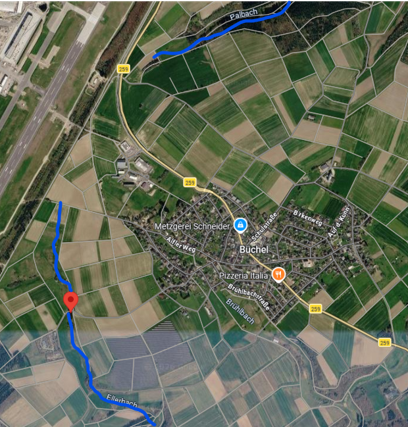
See above. We tested water from the Ellerbach Stream (red marker) shown at the bottom, while the SGD Nord tested fish from Palbach Stream shown up top.
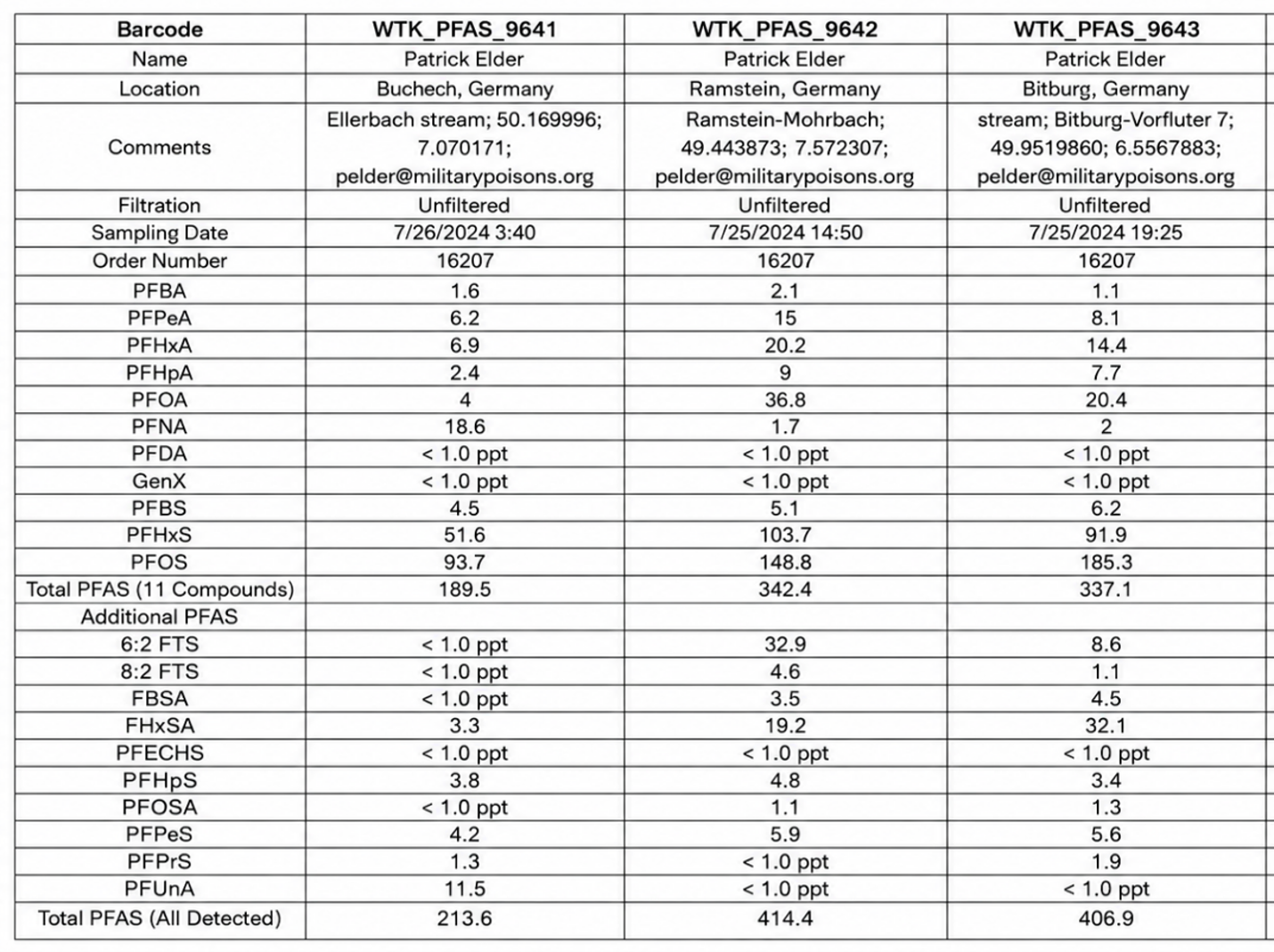
Here are the results of the water samples I collected in July of 2024 with German scientists, who had worked with SGD Nord over the years.
They suggested where to test.
PFOS is generally regarded as one of the most environmentally significant PFAS because of its persistence, tendency to bioaccumulate, and extensive toxicological study. It is regarded as a human carcinogen.
The lab called the town “Buchech” rather than Büchel.
The data above show results for PFOS and total concentrations of PFAS:
Base PFOS Total PFAS (ppt)
Büchel 93.7 213.6
Ramstein 148.8 414.4
Bitburg 85.3 406.9
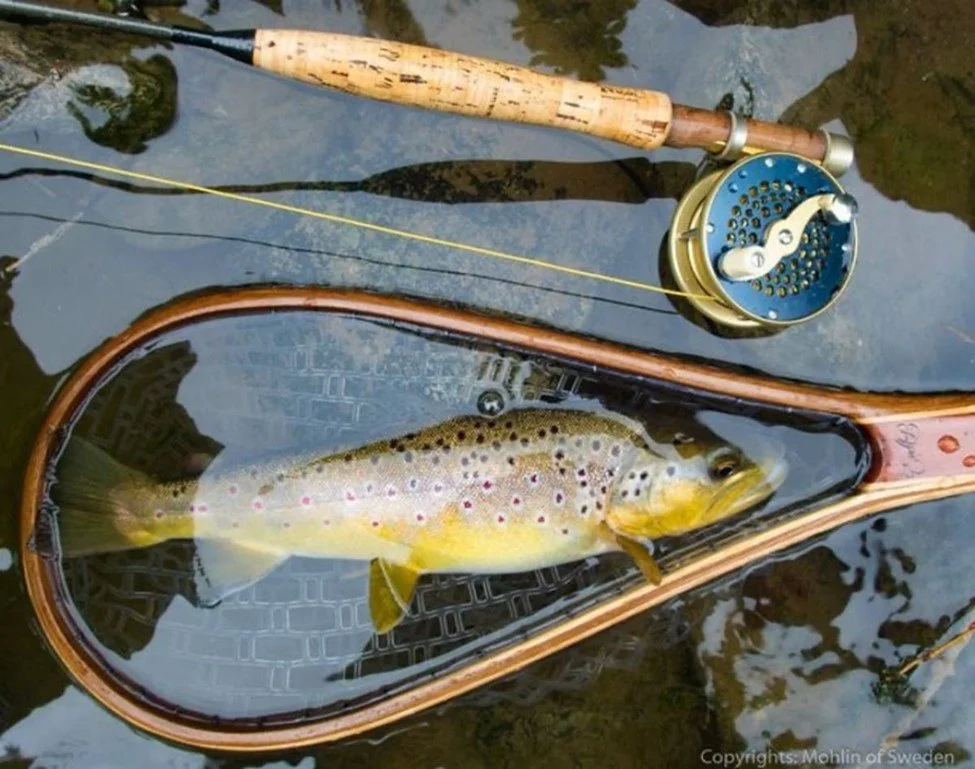
German Brown Trout
The U.S. EPA has reported that PFOS can bioaccumulate in certain fish species by roughly four thousand-fold relative to surrounding water concentrations, although the actual factor varies by species and ecosystem. This means fish may have levels of the carcinogens in their tasty fillet in the hundreds of thousands, or even millions of parts per trillion. This is significant because the U.S. EPA requires that drinking water be kept under 4 parts per trillion (ppt) for PFOS. German drinking-water law establishes a limit of 20 ppt for the combined concentration of PFOS, PFOA, PFNA and PFHxS, effective January 12, 2028. It’s a different story with the fish.
The most revealing official document released to date is SGD Nord’s October, 2024 report, Untersuchungsergebnisse zum PFAS-Gehalt in wildlebenden Fischen ("Investigation Results on PFAS in Wild Fish")
The findings were striking.
Small trout collected from Palbach Stream, east of Büchel Air Base, contained the highest PFAS concentrations measured during the state's investigation. PPB is parts per billion, while ppt is parts per trillion.
PFOS PFOS Total PFAS Total PFAS
(ppb) (ppt) (ppb) (ppt)
769.0 769,000 1,048.9 1,048,900
_____________________________
Again, the U.S. EPA is regulating PFOS in tap water at 4 parts per trillion while Germans are likely eating fish contaminated by U.S./NATO bases with a hundreds of thousands of parts per trillion of PFOS.
Current findings and specific insights into the effects of PFAS on the human body have led to the adoption at the EU level of the COMMISSION REGULATION (EU) 2023/915 of 25 April 2023.
This regulation establishes maximum levels for four relevant PFAS for the first time, and they apply to foodstuffs placed on the market.
All muscle meat of fish, except products listed below must not exceed 2 ug/kg for PFOS and 2 ug/kg for the sum of PFOS, PFOA, PFNA, and PFHxS.
The Brown Trout reported above had 769 ug/kg!
For the fish listed immediately below PFOS may not exceed 7 ug/kg and 8 ug/kg for the sum of PFOS, PFOA, PFNA, and PFHxS.
Muscle meat of the following fish Baltic herring (Clupea harengus membras) Bonito (Sarda and Orcynopsis species) Burbot (Lota lota) European sprat (Sprattus sprattus) Flounder (Platichthys flesus and Glyptocephalus cynoglossus) Grey mullet (Mugil cephalus) Horse mackerel (Trachurus trachurus) Pike (Esox species) Plaice (Pleuronectes and Lepidopsetta species) Sardine and pilchard (Sardina species) Seabass (Dicentrarchus species) Sea catfish (Silurus and Pangasius species) Sea lamprey (Petromyzon marinus) Tench (Tinca tinca) Vendace (Coregonus albula and Coregonus vandesius) Silverly lightfish (Phosichthys argenteus) Wild salmon and wild trout (wild Salmo and Oncorhynchus species) Wolf fish (Anarhichas species)
For the fish listed immediately below PFOS may not exceed 35 ug/kg and 45 ug/kg for the sum of PFOS, PFOA, PFNA, and PFHxS.
Anchovy (Engraulis species) Babel (Barbus barbus) Bream (Abramis species) Char (Salvelinus species) Eel (Anguilla species) Pike-perch (Sander species) Perch (Perca fluviatilis) Roach (Rutilus rutilus) Smelt (Osmerus species) Whitefish
Commission Reg. 2023/915 of 25 April 2023
Under current European regulations, freshwater fish containing up to 35 µg/kg (35,000 ppt) of PFOS—or 45 µg/kg for the combined concentration of PFOS, PFOA, PFNA, and PFHxS—may still be sold for human consumption. Yet this regulatory threshold raises an obvious public health question.
Is it truly prudent for a woman in her first trimester of pregnancy to consume fish containing tens of thousands of parts per trillion of chemicals that accumulate in the body, readily cross the placenta, and have been associated in numerous studies with impaired immune function, developmental effects, reduced birth weight, and other adverse health outcomes? Unlike many contaminants, PFAS are not rapidly eliminated. Each meal contributes to an individual's lifetime body burden. Regulatory limits may define what is legally marketable, but they do not necessarily define what is biologically prudent—particularly for pregnant women, women who may become pregnant, nursing mothers, and young children.
Stay strong, Susan. All human life is sacred.
Love, Pat
=============
The distance from Fort Ord, California, to Büchel Air Base is only about 5,700 miles. This fall, I will travel to Fort Ord to meet with a dozen local environmental advocates, scientists, and Army veterans who are deeply concerned about the rapid redevelopment of the former Army base. New apartments, homes, schools, parks, and retail centers continue to be built directly over fire training areas and lands that contain some of the military's deadliest legacy contamination. Thank you for standing with us. Go here, to the bottom of the page, to contribute. https://www.fortordcontamination.org/