Italian officials suddenly enforce new European PFAS standards, banning the use of contaminated artesian wells
By Pat Elder
July 16, 2026
Per i lettori italiani, ecco la traduzione in italiano su Deepl.
An emotionally charged, high-stakes environmental crisis unfolded in Western Friuli, Italy on July 13, 2026. It culminated in a volatile public meeting in Porcia, Italy, a town located about 7 km from the fire training area at the U.S. Aviano Air Base. Porcia is 90 km north-northeast of Venice.
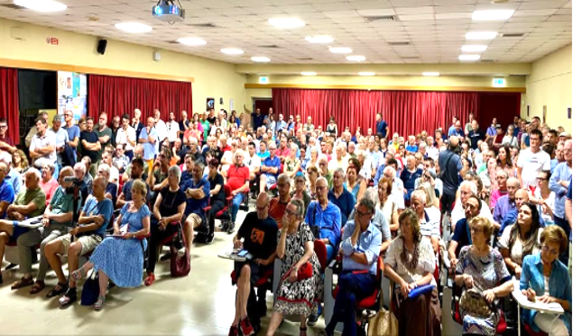
The emergency assembly drew over 300 deeply concerned and angry residents.
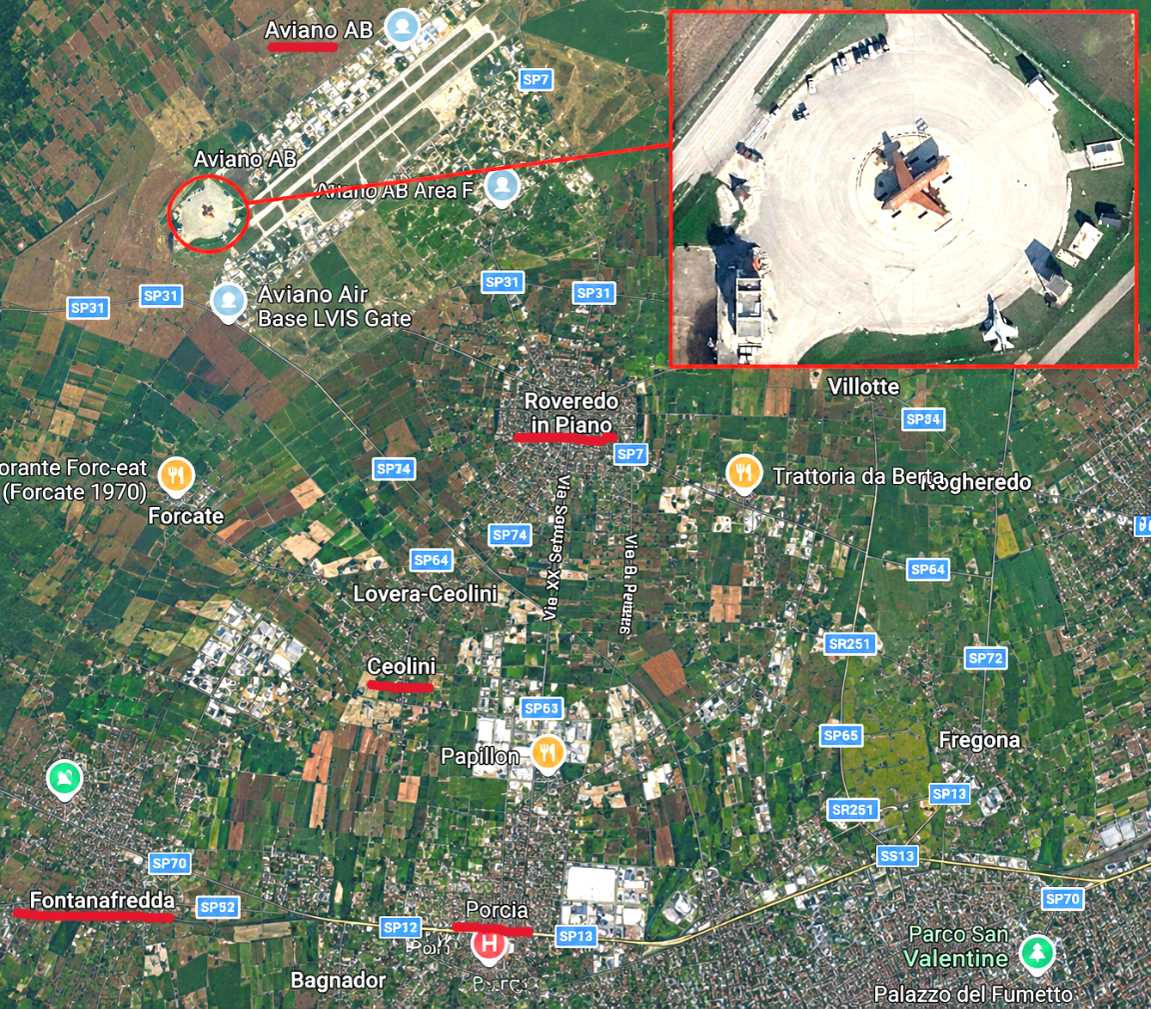
The inset shows the infamous fire training area at Aviano Air Base. Porcia and Fontafredda are about 7 km south. Roveredo in Piano is about 3 km away. The Ceolini industrial site is also a source of contamination.
The public outcry was triggered by severe PFAS contamination suddenly reported in local groundwater. The crowd was furious over delays in transparency, and people demanded immediate accountability. PFAS stands for per-and poly fluoroalkyl substances. There are 40,000 different varieties of PFAS. PFOS and PFOA are types of PFAS. They all move around and injure us in different ways.
The emergency was set in motion when environmental monitoring conducted by the Regional Agency for Environmental Protection (ARPA FVG) and the Western Friuli Health Authority (ASFO) revealed high concentrations of per- and polyfluoroalkyl substances (PFAS) in groundwater. PFAS are synthetic chemical compounds, often called "forever chemicals," known for their persistence in the environment and severe risks to human health.
Although the European Commission announced the new PFAS monitoring requirements in January 2026, Italian authorities first invoked the new 20 ng/L statutory limit during their July 2026 investigation of PFAS contamination affecting communities around Aviano Air Base. On July 13, 2026, a strict new statutory threshold took effect, capping the sum of four critical PFAS compounds at 20 nanograms per liter, or parts per trillion. Laboratory testing on local groundwater samples unveiled concentrations ranging between 100 and 200 nanograms per liter.
It caused a firestorm. In immediate response to the findings of poisoned water, the mayors of four neighboring municipalities—Porcia, Aviano, Fontanafredda, and Roveredo in Piano—issued joint emergency ordinances. These orders imposed a ban on water extraction from all private artesian wells within the designated "red zone" perimeter. The ban strictly prohibits utilizing well water for human consumption, vegetable gardens, and animal watering.
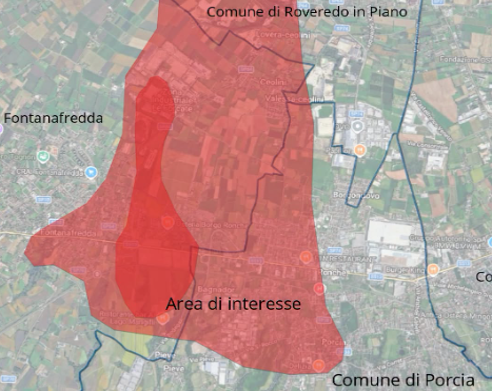
The runway and the fire training area at Aviano Air Base are just north of this plume map, just out of sight. Groundwater in the region flows to the south-southeast. Commune of Porcia Facebook page
For thousands of years before the Roman conquest, people of the Pordenone Plain relied on the region's abundant artesian groundwater for drinking water. That is over now.
Technical presentations by ARPA FVG experts linked the groundwater contamination to two distinct sources in the region. They say PFOS originated from Aviano Air Base while PFOA contamination came from landfill runoff at the Ceolini Industrial site.
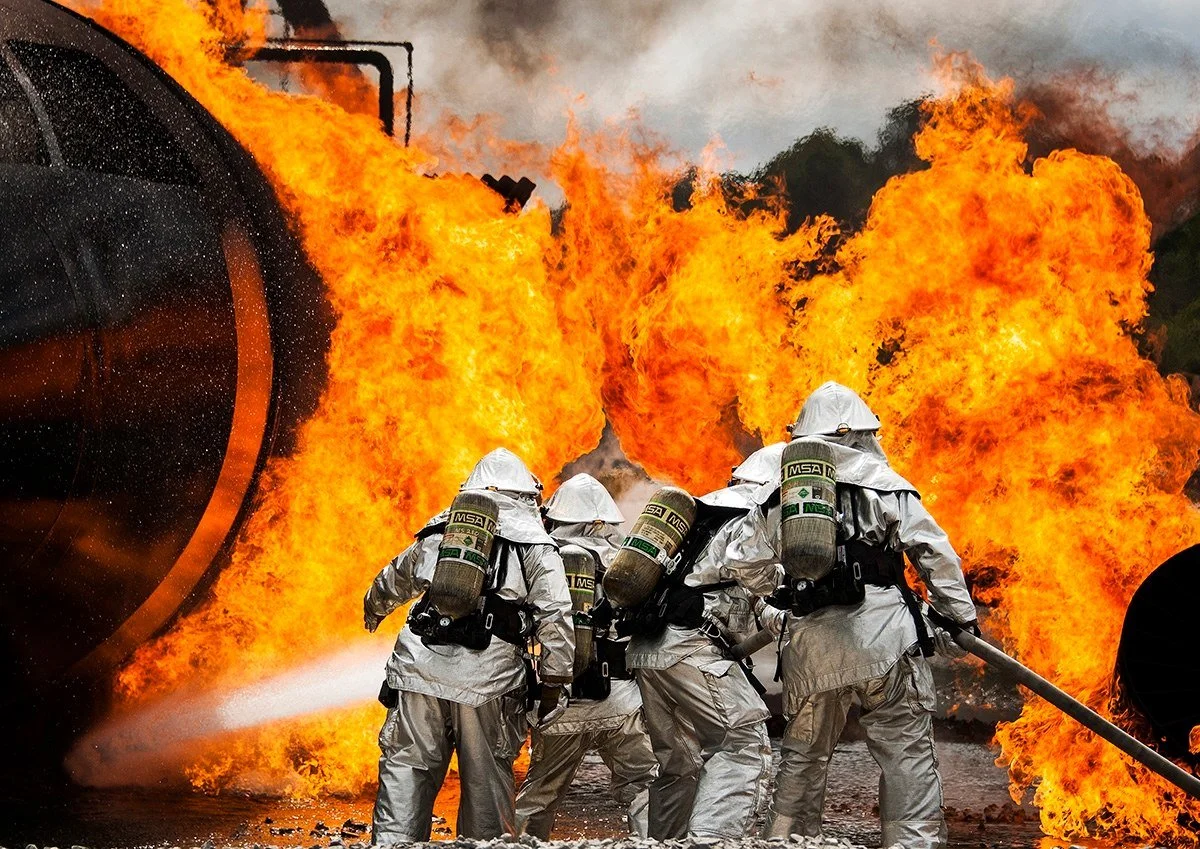
What were they thinking?
At. U.S. bases around the world, airmen dug craters and regularly filled them with hundreds of gallons of jet fuel and other hazardous substances. They ignited the fuel, creating a massive fireball that airmen would extinguish using the cancer-causing foams. The training went on either bi-weekly or monthly from the early 1970’s. The consequences are apocalyptic.
The Hazardous Waste
We don’t know if the Americans used the Ceolini landfill for its hazardous waste. The Aviano command says 98% of its waste is incinerated at local facilities. Either way, it a big problem for Italy. PFAS doesn’t break down and it doesn’t go away. If it is landfilled, it forever poisons groundwater and surface water. If it is incinerated, is sprinkles a silent carcinogen dust 150 km away, far enough to reach Rovinj, Croatia.
Public discussion in Italy almost always assumes that military PFAS contamination is synonymous with firefighting foam. The U.S. Department of Defense itself now acknowledges that this is far from the complete picture.
In August 2023, the Pentagon released its Report on Critical Per-and-polyfluoroalkyl substance uses. The report identifies hundreds of continuing military uses of PFAS, including:
Chromium electroplating
Hydraulic systems
Lubricants and greases
Adhesives
Paints and coatings
Sealants
Wire insulation
Electronic components
Radar systems
Batteries
Aerospace coatings
Textiles
Fuel system components
Numerous maintenance and industrial products
Viewed in this context, AFFF is only one source of PFAS entering the military waste stream. Every day, military installations use numerous PFAS-containing products during routine maintenance and industrial operations. Those materials eventually become waste. Some are washed into drains, where they enter wastewater treatment systems. Others become contaminated rags, absorbents, filters, protective clothing, industrial sludges, spent activated carbon, ion-exchange resins, or contaminated soils. These wastes are then transported for disposal, typically by hazardous-waste incineration or landfilling.
Public health officials seemed to follow the same script, like it was prepared from the American military command. They emphasized that the contamination strictly impacts untreated private artesian wells. The public municipal aqueduct network remains entirely safe, free of contamination, and subject to continuous monitoring.
It is true, but the entire food chain is poisoned. The banks of streams are contaminated and so are the sediments and the invertebrates that feed on them. The tiny fish are saturated with the carcinogens and, as they swim downstream, they are consumed by larger fish that we eat. The birds, wildlife, rabbits, and deer are all contaminated. Chickens and eggs, too. Don’t let your dogs drink from puddles.
Think of the ground like a giant subterranean carcinogenic sponge that will squeeze out cancer causing agents for a very, very long time. The banks of streams are coated with the chemicals. When they dry they are lifted as tiny dust particles to settle in our lungs and our homes. It is the dust that poses the major PFAS pathway to small children. Change your air conditioner vents more regularly. Don’t sweep or vacuum. Use a wet mop.
You can test your own water for cheap. Cyclopure in Chicago has simple test kits for $85. You collect the water sample from your tap water or a stream. The water pours through the filter and you mail the dry cup back to Chicago in the box they provide. https://cyclopure.com/product/wtk/
You can also test your own blood for $279. It’s a do-it-yourself skin prick test by Empower DX Lab. Just mail it back and you’ll have results in two weeks.
A second public town hall is scheduled for next week in Fontafredda but it is not online yet. You’ve got to get the microphone out of their hands. This should be a dialogue. You’ve got questions they must answer.
Perhaps nowhere is the gap between the science and the people wider than in Italy. The data is produced by Regional Agency for Environmental Protection of Friuli Venezia Giulia. ARPA FVG publishes the data but it is tough to negotiate! They’ve got to simplify things, not because people are stupid, but because they’ve made it unnecessarily complicated. Got to the ARPA FVG website. Open the dataset: ARPA FVG Groundwater Classification Database On the upper right of the page, click Export (Esporta). Choose one of the download formats, likely CSV. Download the complete dataset. Just a half million rows.. They could do a better job. See if you can make sense of this data extracted from the monster spreadsheet.
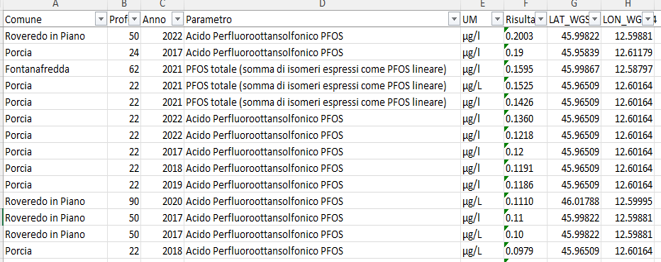
Prof is Profondita, or depth. This is important because PFAS has been draining into the ground since the early 1970’s. It may be much deeper and it may be draining into surface waters further downstream. Sometimes the US Air Force will play a shell game. They’ll test shallow depths and report low levels. They’ll test deeper down and report low levels. They may not report the truth in between.
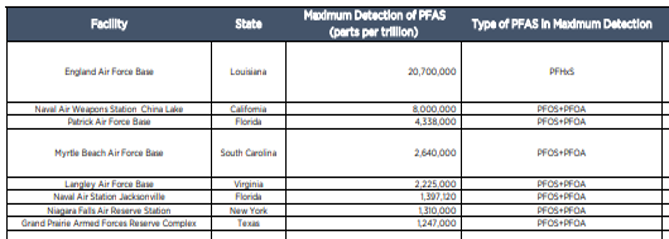
EWG – Top 100 bases with PFAS in groundwater
Many bases similar to Aviano have groundwater levels above 1 million parts per trillion while Italians are being told about levels of 100-200 parts per trillion in selected testing several kilometers away.
The new legal limits describe the concentration for the sum of four PFAS at 20 nanograms per liter
The four PFAS included in the 20 ng/L standard are:
PFOS — Perfluorooctane sulfonic acid
PFOA — Perfluorooctanoic acid
PFNA — Perfluorononanoic acid
PFHxS — Perfluorohexane sulfonic acid
Let’s go back to the spreadsheet above, sorry to get off track.
Ug/L is micrograms per liter, or parts per billion
Ng/L is nanograms per liter, or parts per trillion.
You’ve got to multiply all of the values in the database by 1,000 to make sense of them. So, when you see .2003 at the top of the chart for PFOS, that really means 200.3 parts per trillion. Latitude and Longitude are fun to play with! Just copy and paste them into a Google map and the spot where the sample was taken will pop up.
Municipal authorities have known how bad it is since 2017. They just didn’t tell you. It is largely the same whereever there are large U.S. The U.S. Air Force has known the foams are dangerous since the 1970’s but they don’t give a damn about you. The point here is that you cannot change the actions of the Americans, but you can pressure your governmental apparatus to do a better job protecting you. It’s best not to be upset with them. Think of it this way. The European Commission knew what they were doing when they issued the mandate earlier this year. This was a good development, though way overdo. We must move forward.
Follow the DNA.
PFAS are not simply contaminating groundwater. They are entering the bodies of pregnant women, crossing the placenta, and reaching children before they are born. They are transferred again through breast milk. Each generation begins life carrying chemicals released by the one before it. As we continue this course, we are compromising the health of future generations. Ultimately, this is an existential threat.
=========================================================
The distance from Fort Ord, California, to Porcia, Italy is only about 6,100 miles.
This fall, I will travel to Fort Ord to meet with a dozen local environmental advocates, scientists, and Army veterans who are deeply concerned about the rapid redevelopment of the former Army base. New apartments, homes, schools, parks, and retail centers continue to be built directly over fire training areas and lands that contain some of the military's deadliest legacy contamination.
Over the years, almost 2,000 local residents, former service members, and civilian workers have told us about cancers and other illnesses they believe are connected to their exposure at Fort Ord. We have recorded 138 with multiple myeloma, a deadly blood cancer. They drank the water and breathed the air.
We are especially concerned about large groundwater plumes containing trichloroethylene (TCE), tetrachloroethylene (PCE), and carbon tetrachloride (CT). These chemicals migrate into buildings as vapor, potentially affecting the air people breathe inside their homes and workplaces. We are also concerned about the possible presence and movement of PFAS and other toxic contaminants in groundwater, soil, surface water, and indoor dust.
Our goal is to collect independent environmental samples, work with qualified experts, and make the results available to the public. We believe communities deserve reliable information about the environment where they live, work, and raise their families. We need your help. We need to pay for airfare for three of us (from Maryland, Ohio, and Michigan). We must pay for lodging for four nights. And then we have to pay for the testing. We already have the Cyclopure test kits for PFAS. We still need to pay for testing of soil, air, and water at different locations. $10,000 is our goal. See who “we” are.
Thank you for standing with us. Go here, to the bottom of the page, to contribute.