30 Questions to Ask at the Fontanafredda PFAS Public Meeting
By Pat Elder
July 18, 2026
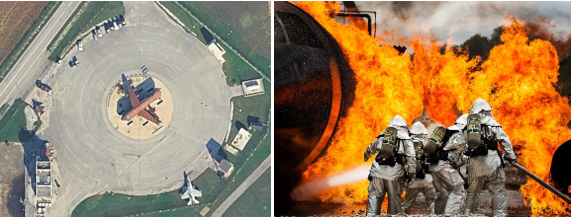
Many thousands of liters of carcinogenic PFAS drained into groundwater from the fire training area shown here at Aviano Air Base. The image on the right depicts a U.S. Air Force firefighting training exercise at Hurlburt Field, Florida.
Residents of Aviano, Fontanafredda, Porcia, and Roveredo in Piano, Italy recently learned that authorities had imposed a ban on the use of many private artesian wells after PFAS concentrations exceeded the new European drinking water standard. The announcement came as a shock to many families who have relied on these wells for generations. At the public meeting in Porcia on July 13, residents expressed concern not only about the contamination itself, but also about how long it may have existed, what risks it poses to their health, and what information remains undisclosed.
A second public meeting will be held in Fontanafredda on July 21. Public meetings are most productive when citizens ask clear, informed questions and expect clear, evidence-based answers. The following thirty questions are intended to help residents better understand the history of the contamination, the extent of its spread, potential exposure pathways, possible health implications, ongoing investigations, and the actions that public authorities and the U.S. Air Force intend to take to protect public health and restore confidence. Here are 30 questions to ponder.
History and Accountability
1. When did the US Air Force begin using aqueous film-forming foam containing PFAS and how many liters of the material did they allow to drain into the ground?
2. When did the U.S. Air Force first learn that aqueous film-forming foam contaminated groundwater, and when did Italian authorities first become aware of this risk at Aviano?
3. For how long has the Regional Agency for Environmental Protection (ARPA FVG) known of these dangerous concentrations in the well water and why didn’t they tell us earlier?
4. Can you publish a complete timeline showing when PFAS were first sampled, when elevated concentrations were first detected, when government agencies became aware of the contamination, and when the public was notified?
5. Has the U.S. Air Force agreed to provide all environmental records concerning PFAS use, spills, firefighting exercises, groundwater monitoring, and cleanup? If not, what reason was provided and what information has been withheld?
Extent of the Contamination
6. What are the highest PFAS concentrations ever detected in groundwater, soil, surface water, sediment, wastewater, and drinking water on Aviano Air Base? Will you release all of these data?
7. Can you publish maps showing the full extent of groundwater contamination for every PFAS compound detected, including the direction and projected movement of the plume?
8. Can you describe all of the surface water testing that has been performed in the region for PFAS? Have sediments and stream banks been tested, if so, can you share the results in a format that most of us can understand?
9. Have outdoor air, household dust, road dust, and agricultural soils surrounding Aviano Air Base been tested for PFAS? If so, what were the results?
10. Which wastewater treatment plants receive wastewater from Aviano Air Base? Have influent, effluent, and sewage sludge been analyzed for PFAS, and will those results be made public?
11. Can you describe the extent of chromium electroplating at Aviano over the years? How is the wastewater from this process disposed of?
Waste Disposal and Secondary Sources
12. Can you identify all the locations where solid waste laden with PFAS from Aviano has been sent for disposal?
13. Can you provide a list of the locations of areas where sewer sludge has been spread or otherwise disposed of that originated at this wastewater treatment plants?
14. Have you collected and tested samples of leachate from landfills in the region for PFAS. Can you share all of these results with the public?
15. The Aviano command says 98% of its waste is incinerated at local facilities. Do these incinerators fully destroy the PFAS? Have tests been conducted downwind of these emissions?
Private Wells and Environmental Monitoring
16. How many private wells have been sampled, how many remain untested, and when will every affected well owner receive test results?
17. Will the Region of Friuli Venezia Giulia or ASFO provide free PFAS testing for all private well owners within and adjacent to the affected municipalities? If not, why not, given that residents have been instructed not to use their wells?
18. How often will groundwater, surface water, drinking water, and private wells be sampled going forward, and who will pay for that monitoring?
Food Chain and Wildlife
19. Have milk, cheese, vegetables, fruit, wine grapes, forage crops, and livestock from the affected area been tested for PFAS? If so, will the results be released?
20. Have wild deer, wild boar, fish, birds, or other wildlife been tested for PFAS? If not, why not?
21. Have you tested fish? If so, can you share the results?
Human Exposure and Public Health
22. For how many years were residents likely exposed before the advisory was issued?
23. Have you performed any blood testing of people who have been drinking contaminated well water? If so, can you provide those results retaining the anonymity of those impacted?
24. Will the Region provide free blood serum PFAS testing and long-term medical follow-up for residents who are believed to have been exposed?
25. If PFAS are known to impact women who are pregnant or may become pregnant, and are known to affect fetal development, have you initiated any medical outreach programs targeting this population?
26. Will schools and childcare facilities within the affected area receive priority testing of drinking water, dust, and soil?
27. Should residents reduce their exposure to PFAS-containing dust by using wet cleaning methods, replacing HVAC filters, and minimizing the tracking of contaminated soil into their homes?
28. Should people in impacted areas be advised to change their air conditioner vents and use wet mops instead of brooms and vacuums in their homes to cut down on the carcinogenic dust particles that are likely in their homes?
Cleanup and Future Policy
29. What attempts at PFAS remediation, if any have been completed at Aviano Air Base, what remains to be done, and what evidence shows these actions have reduced contamination?
30. If other PFAS compounds are known to be dangerous, why are you only concerned with PFOS, PFOA, PFNA and PFHxS?