
Lead bullets pose a threat to human health at the Fort Ord Dunes State Park
By Pat Elder
July 1, 2026
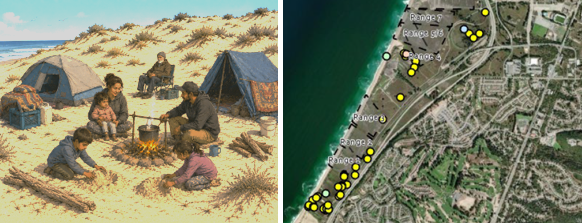
Left- AI-generated illustration depicting a homeless encampment on the Fort Ord coastal dunes. Right – The yellow dots show homeless encampments. - California Department of Parks and Recreation, 2025 Annual Report, Fort Ord Dunes State Park.
A 2025 California Department of Toxic Substances Control (DTSC) and California State Parks Annual Report documents that significant quantities of lead bullets remain on the surface of portions of Fort Ord Dunes State Park nearly three decades after half-hearted remediation efforts were completed by the Army. Quarterly inspections continue to identify huge areas with bullet cover, while annual lead removal operations continue to recover substantial quantities of lead from the dunes.
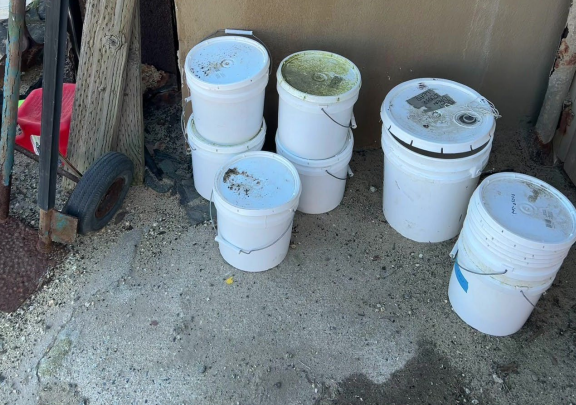
Buckets containing lead bullets and fragments collected from the sand dunes at the former Fort Ord, popular with vacationers. - California Department of Parks and Recreation 2025 Annual Report, Fort Ord Dunes State Park
In December 2025 alone, State Parks personnel removed 106 pounds of lead bullets from Ranges 15 and 16 after identifying areas of concentrated surface contamination during routine inspections. The report also documents continuing homeless encampments within former firing ranges and the construction of a new campground in portions of the historic military training area.
These findings raise important questions regarding potential human exposure to lead among several groups of park users, particularly individuals who spend extended periods in the dunes.
Magnitude of the Remaining Contamination
The Army claims that the cleanup of contamination at the beach is complete, but they are lying to the public. Rather, it has become an ongoing management issue for the state, requiring repeated inspections and recurring removal activities. Surface inspections conducted throughout 2025 found concentrations of lead bullets in many of the same locations identified during inspections conducted between 2017 and 2022. Inspectors continue to map visible bullets, remove smaller accumulations during quarterly inspections, and schedule larger cleanup operations where concentrations remain elevated. The recovery of more than one hundred pounds of lead during a single cleanup event illustrates that substantial quantities of metallic lead remain accessible at or near the surface in portions of the former firing ranges.
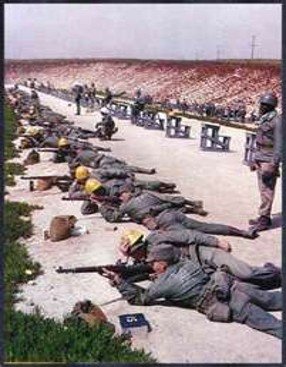
Tens of thousands of soldiers trained each year for more than 50 years. The cumulative total of bullets reached into the billions of rounds.
Unlike many former military ranges located on stable soils, Fort Ord occupies an active coastal dune system. Sand movement driven by strong coastal winds, winter storms, bluff erosion, and wave action continually reshapes the landscape. The annual report itself notes continuing bluff erosion caused by winter storms and ongoing wind erosion in portions of the park. These natural processes can expose bullets that were previously buried beneath sand while simultaneously burying others.
Areas appearing relatively clean during one inspection may later contain newly exposed bullets following periods of strong winds or storm erosion, explaining why annual inspections and repeated cleanup efforts remain necessary decades after the initial remediation. Of course, the Army understood this when they proclaimed a clean bill of health for the dunes many years ago. It’s the same story in many places around the world. They just don’t give a damn.
Potential Exposure to Campground Visitors
A new campground is being constructed under the California Department of Toxic Substances Control, (DTSC) oversight, with environmental monitoring during grading activities. These measures reduce, but do not eliminate the likelihood of direct exposure within the campground itself. Nevertheless, campground visitors are naturally drawn to explore the surrounding dunes, particularly children and families. Individuals leaving designated areas and entering former firing ranges may encounter visible lead bullets or fragments exposed at the surface. Contact with contaminated sand may result in incidental ingestion through ordinary hand-to-mouth activity, while windblown dust generated during dry conditions may provide an additional pathway for inhalation exposure.
Homeless Encampments
The annual report documents that law enforcement removed homeless encampments from Range 1 during 2025. Individuals residing within former firing ranges may experience considerably greater opportunities for lead exposure than recreational visitors because of the duration and nature of their activities.
Living in the dunes often requires repeated disturbance of surface sands while constructing campsites, leveling sleeping areas, digging fire pits, or building makeshift shelters. These activities increase direct contact with surface soils where lead bullets remain. Windblown sand can accumulate on bedding, clothing, food, cooking utensils, and personal belongings, creating repeated opportunities for ingestion and inhalation. Individuals living outdoors also spend many hours each day in direct contact with the ground, substantially increasing cumulative exposure compared with visitors spending only a few hours in the park.
The annual report documents the continued presence of homeless encampments but does not discuss whether environmental lead exposure has been evaluated among these individuals or whether any public health assessment has been conducted.
Potential Exposure Among Hikers and Other Recreational Users
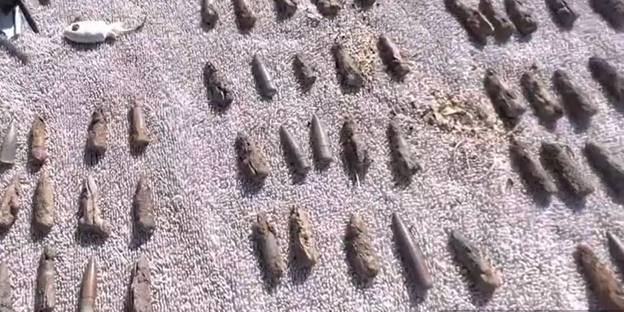
See Monterey Magnet Man’s brilliant YouTube video. He found 93 bullets while metal detecting in a small area on the Fort Ord Dunes.
Many hikers leave established paths to explore the dunes, former bunkers, and the historic military landscape. Those entering former firing ranges may encounter visible lead bullets or fragments resting on or near the surface. Sitting directly on contaminated sand, allowing children to play in affected areas, handling bullets as curiosities, or disturbing surface sediments during recreation all provide plausible pathways for lead exposure. Although exposure during a single visit is likely to be relatively small, repeated recreational use of contaminated areas could increase cumulative contact over time.
Occupational Safety Highlights an Important Concern
An important observation emerges from the annual report. State Parks personnel conducting lead removal operations wear gloves, long sleeves, safety glasses, and N95 respirators while collecting bullets from the dunes. These protective measures acknowledge that collecting and disturbing lead-contaminated materials presents an occupational exposure concern. In contrast, members of the public entering former firing ranges generally receive no comparable protective equipment and may be unaware that visible lead bullets remain present on the ground surface.
Conclusions
The 2025 DTSC annual report demonstrates that lead contamination remains a serious management issue within portions of Fort Ord Dunes State Park. Continuing inspections, repeated bullet mapping, and the recovery of 106 pounds of lead during a single cleanup operation indicate that substantial quantities of lead remain accessible on or near the surface of the former firing ranges. The report further documents continuing coastal erosion, ongoing dune migration, recurring homeless encampments, and the ongoing need for lead removal, indicating that this is not a static contamination site but a constantly changing coastal environment where storms and wind can expose previously buried bullets.
The potential for human exposure varies considerably depending upon how the park is used, although we must keep in mind that lead bullets weather through physical abrasion and chemical corrosion. Weathering produces small lead-containing particles that adhere to fine sand and dust. The strong coastal winds suspend these fine particles in the air where they can be inhaled.
Campground visitors using the new facilities are likely to experience some exposure, while hikers who leave designated trails may encounter highly contaminated areas. Individuals living for extended periods within homeless encampments located inside former firing ranges may experience the greatest opportunity for repeated exposure because of prolonged contact with contaminated sand, windblown dust, and surface lead. Additional environmental monitoring and public health evaluation, particularly regarding populations residing within the former firing ranges, would provide a stronger scientific basis for evaluating the magnitude of these potential risks.