Negotiating With the Military—While Wearing the Uniform
Lt. Col. Kaialiʻi Kahele, Hawaii Air National Guard, represents Hawaiʻi’s indigenous population in negotiations with the military over leases.
By Pat Elder
April 28, 2026
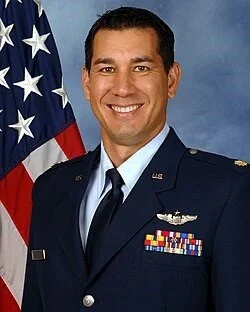
Lt. Col. Kaialiʻi Kahele
With Hawaiʻi’s military land leases nearing a critical juncture and Congress focused on Indo-Pacific security, Kaialiʻi Kahele recently led an Office of Hawaiian Affairs delegation to Washington, D.C., pressing federal and military officials on the future of public-trust lands under Pentagon control.
The meetings, which concluded in late April, brought OHA leadership into direct discussions with Department of Defense officials and members of Congress, marking an early phase in what is expected to be a prolonged negotiation over tens of thousands of acres of military-leased land across Hawaiʻi.

The Office of Hawaiian Affairs (OHA) is a state agency established in 1978 to improve the well-being of Native Hawaiians. Governed by a nine-member elected Board of Trustees, OHA manages a trust to advocate for Native Hawaiians, providing grants, loans, and educational resources, while addressing issues like housing, health, and land rights.
Notably absent from the coverage is that Kaialiʻi Kahele serves as a Lieutenant Colonel in the Hawaii Air National Guard. In a debate centered on military land use and federal control, that dual role provides important context for understanding both his access to defense leadership and the institutional lens through which these negotiations may unfold.
It is very rare for a sitting military officer to play a lead public role in disputes over military-controlled Indigenous lands. The standards of ethical conduct for employees of the executive branch enshrined in federal law are intended to insulate uniformed officers from political advocacy and policy negotiations, especially where federal land use and military authority are at stake. Yet Kaialiʻi Kahele appears to occupy both roles at once: a Lieutenant Colonel in the Hawaii Air National Guard and a leading indigenous advocate on the future of military-leased lands in Hawaiʻi. Readers deserve to understand it.
There are no clear precedents in the United States where a currently serving military officer has simultaneously acted as a lead public negotiator over military use of Indigenous lands. While National Guard officers operate in a hybrid state–federal status, the same norms of restraint apply when engaging in public policy disputes involving federal military operations. Against that backdrop, Kaialiʻi Kahele’s dual role represents an unusual convergence of responsibilities that warrants fuller public context.
A review of coverage by local outlets and national organizations reveals no disclosure that Kaialiʻi Kahele serves as a Lieutenant Colonel in the Hawaiʻi Air National Guard while reporting on military land lease negotiations. His military service is absent from the very reporting where it carries the most relevance. Kahele serves with the 201st Air Mobility Operations Squadron at Hickam Air Force Base. Kahele is a decorated combat veteran with multiple deployments to both Iraq and Afghanistan since 2005.
In a debate centered on federal military control of Hawaiʻi’s public trust lands, this omission matters. Readers deserve to know when a leading voice in negotiations over military use of land is also a senior officer within the military structure itself.
The question of transparency takes on added weight given OHA’s recent history. A 2022 audit found more than $7 million in questionable spending tied largely to prior leadership at the Office of Hawaiian Affairs, including evidence of fraud, waste, and abuse.
The episode underscored persistent concerns about transparency in the management of Native Hawaiian trust assets. Against that backdrop, the absence of any consistent disclosure that Kaialiʻi Kahele serves as a Lieutenant Colonel in the Hawaii Air National Guard in coverage of military land negotiations is part of a broader pattern of challenged institutional transparency.
Federal ethics standards, particularly 5 C.F.R. § 2635.101(b)(14), require government personnel to avoid actions that create the appearance of a loss of impartiality. That principle does not depend on proving wrongdoing. It is rooted in maintaining public confidence. In a debate over military control of Hawaiʻi’s public trust lands, the simultaneous roles of a senior military officer and a leading civilian advocate present exactly the kind of dual-position dynamic that this standard is designed to bring into public view.
Here is the applicable federal law.
===============================
PART 2635—STANDARDS OF ETHICAL CONDUCT FOR EMPLOYEES OF THE EXECUTIVE BRANCH
https://www.ecfr.gov/current/title-5/chapter-XVI/subchapter-B/part-2635#p-2635.101(b)(14)
§ 2635.101 Basic obligation of public service.
To ensure that every citizen can have complete confidence in the integrity of the Federal Government, each employee must respect and adhere to the principles of ethical conduct set forth in this section, as well as the implementing standards contained in this part and in supplemental agency regulations.
(b) General principles. The following general principles apply to every employee and may form the basis for the standards contained in this part. When a situation is not covered by the standards set forth in this part, employees must apply the principles set forth in this section in determining whether their conduct is proper.
(14) Employees shall endeavor to avoid any actions creating the appearance that they are violating the law or the ethical standards set forth in this part. Whether particular circumstances create an appearance that the law or these standards have been violated shall be determined from the perspective of a reasonable person with knowledge of the relevant facts.
==============================
Lieutenant Colonel Kahele should step aside from his negotiating role because reasonable people feel he is violating ethics laws by appearing to represent both sides of these negotiations.
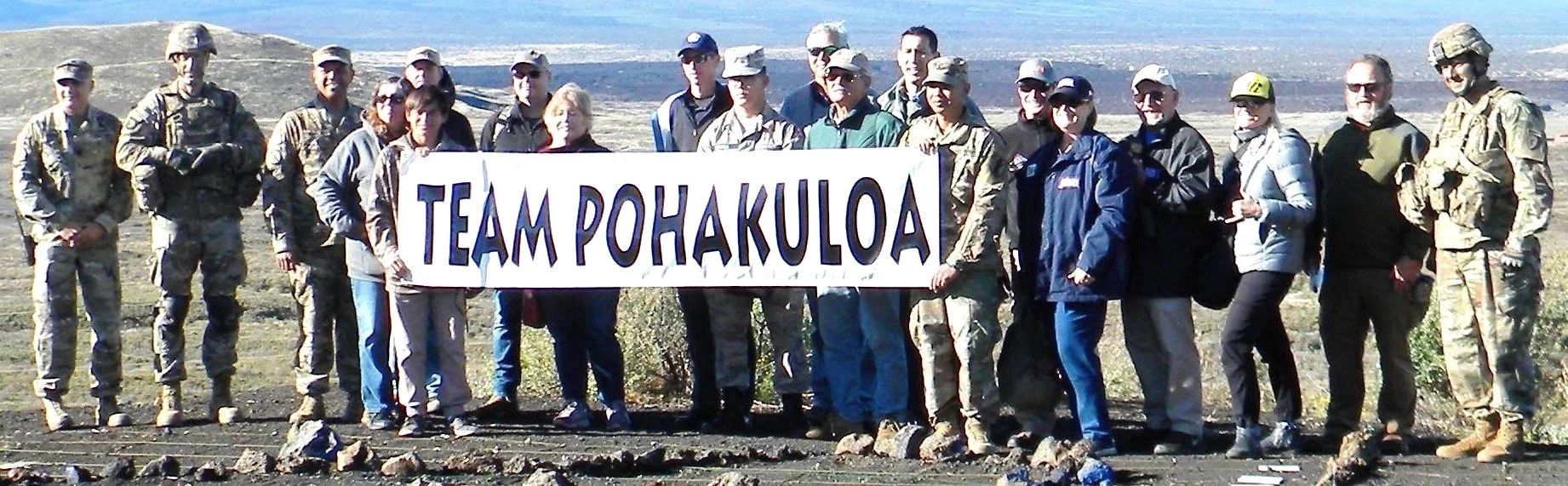
Kaialiʻi Kahele is in the back row between O and A of Pohakuloa at the 2019 "Champions of Pohakuloa" breakfast and tour of heavy artillery, rockets, helicopter, machine gun live-fire. Lt. Col. Kahele was in Washington last week representing Native Hawaiians in negotiations with the Pentagon over the base’s land leases—placing a longtime military participant in a key role on the other side of the table.