Part 1 of a 2-part series
Pat Elder
March 21, 2026
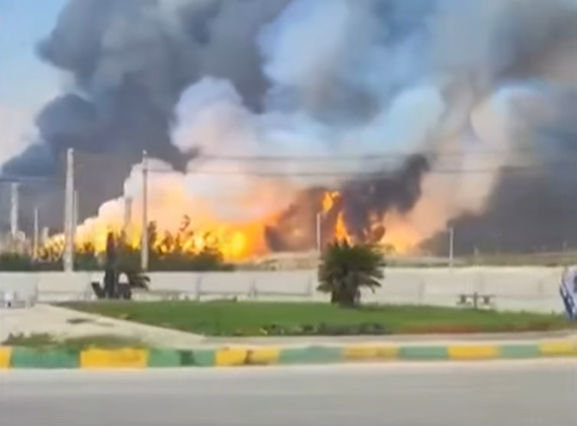
Israeli warplanes set Iran’s South Pars gas field ablaze on March 18, 2026.
On March 18, 2026, Israeli warplanes struck Iran’s South Pars gas field, igniting fires across one of the most critical energy complexes on Earth. The attack targeted infrastructure at the heart of the global natural gas system, sending flames through facilities that underpin a significant share of the world’s fertilizer production.
The South Pars strike is not just an energy story—it is also a story about the global food supply. Modern agriculture is fundamentally dependent on natural gas, which is used to produce ammonia and urea fertilizers. The Persian Gulf region supplies a substantial share of the world’s nitrogen fertilizers, so disruptions to this system reverberate immediately through global markets, agricultural production, and ultimately the food supply.
Countries most exposed to fertilizer shocks—particularly Japan, South Korea, Taiwan, and import-dependent nations across Southeast and South Asia—are increasingly turning to wastewater sludge as a substitute nutrient source, a shift that risks transferring industrial PFAS contamination from urban waste streams directly onto agricultural soils. We will examine that shift in Part 2.
Here, we’ll examine the contamination unfolding from the widespread use of aqueous film-forming foam (AFFF) across the war theater.
Fires at gas fields, refineries, tank farms, and export terminals are not fought with water. Hydrocarbon fires require foam. At petroleum and gas installations, fire suppression systems have long been built around aqueous film-forming foam, or AFFF, a firefighting agent designed to spread across fuel surfaces, suppress flammable vapors, and prevent re-ignition. Foam smothers the fires. Its active ingredients are made of carcinogenic PFAS compounds.
For decades, AFFF has been the global standard for fighting liquid fuel fires in the military, at airports, and throughout the oil and gas sector. Most refineries and LNG plants in the Gulf were built long before the recent push toward fluorine-free alternatives. Their systems were designed around fluorinated foams.
Even where fluorine-free foams are beginning to enter the market, the transition is spotty, especially in high-risk petroleum settings where operators remain reluctant to abandon legacy systems. Often, an “environment be damned” mentality prevails while putting out petroleum fires.
In Iran, it is likely that older, deadlier AFFF stockpiles remain in use. Sanctions have tortured the Iranians on many fronts, constraining access to newer technologies and replacement equipment.
AFFF is a delivery system for PFAS, linked to cancer, immune dysfunction, endocrine disruption, and developmental harm. The compounds travel with firefighting runoff, infiltrate soil, enter drainage systems, contaminate surface water, and move into wastewater streams. In a war involving repeated fires at petroleum and gas facilities, PFAS contamination will become a defining legacy of the conflict.
Calculating the scale
Exact volumes of foam used in the current war are not publicly reported, but industry standards make clear the likely scale. Large hydrocarbon fires at refineries and tank farms can require sustained foam application over wide surface areas for hours or even days. A single major dike or tank fire can consume thousands of gallons of foam concentrate.
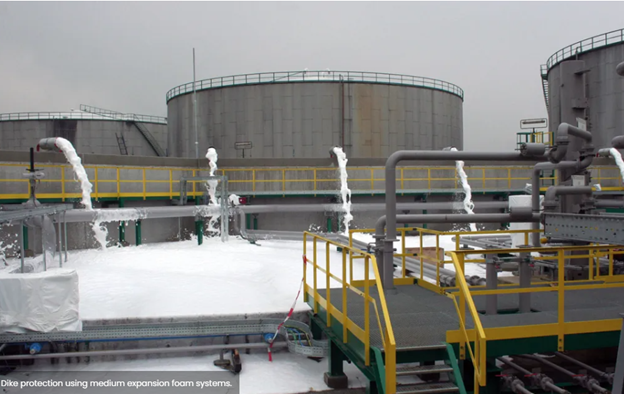
The image shows a foam system used for dike protection in oil and gas facilities. While the specific foam type shown here cannot be determined visually, such systems in the Gulf region have historically been designed around PFAS-based foams. Gulf Fire
Across multiple simultaneous fires involving storage tanks, pipelines, refineries, and gas-processing infrastructure, cumulative use can rise into the hundreds of thousands of gallons of concentrate, producing millions of gallons of finished foam solution.
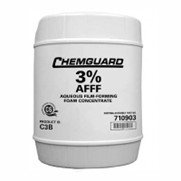
A large fuel storage tank fire can require thousands of gallons of 3% AFFF concentrate and hundreds of thousands of gallons of finished foam solution to extinguish. The concentrate is typically mixed at a ratio of 3% foam concentrate to 97% water and then aerated to produce the firefighting foam.
AFFF-type foams require approximately 1 gallon per minute liquid concentrate flow for every 10 square feet of burning surface on a hydrocarbon-type fuel.
A large storage tank in the South Pars Gas Complex may contain a 78-meter diameter. This is 4,778 square meters, which converts to about 51,434 square feet.
This tank would require 5,143 gallons of liquid foam concentrate per minute. It may require from 10 to 30 minutes to extinguish the flame in a single tank.
AFFF Requirements for a single 78-Meter Diameter Tank Fire (3% Solution)
Time applied Gals. Conc. Gals. Foam
10 minutes 1,543 51,430
20 minutes 3,086 102,860
30 minutes 4,629 154,290
===========
Israeli strikes on Iran’s South Pars gas field and the Asaluyeh processing hub on March 18 triggered a wave of retaliatory attacks across the Gulf that hit refineries, gas plants and export terminals in Saudi Arabia, Kuwait, Qatar, the United Arab Emirates and Bahrain. Reuters, March 20, 2026
Following is a list of locations where missiles and drones have ignited blazes that have likely been doused with AFFF:
South Pars gas field, Iran
Asaluyeh, Iran
Shahran fuel tanks, Tehran, Iran
Ras Laffan Industrial City / LNG facilities, Qatar
Pearl gas-to-liquids plant, Ras Laffan, Qatar.
Mina al-Ahmadi refinery, Kuwait
Mina Abdullah refinery, Kuwait
Ras Tanura refinery / export complex, Saudi Arabia
SAMREF Refinery, Yanbu, Saudi Arabia
Ruwais refinery complex, UAE
Fujairah oil industry zone / export terminal , UAE
Bapco Sitra refinery / oil refinery complex, Bahrain
Haifa Oil Refinery, Israel
Lanaz refinery, Erbil
Two fuel tankers in Iraqi waters near Basra
Oil tanker off Oman’s Musandam peninsula
Habshan gas processing complex, UAE
Bab oil field, UAE
Ashdod refinery, Israel
In multi-site, simultaneous attacks like those unfolding on our TV screens, total AFFF use can top millions of gallons, injecting venomous poisons into the earth throughout the Middle East.
From Fire Suppression to Environmental Contamination
When thousands of gallons of concentrate are deployed in a single incident, the result is the runoff of significant quantities of persistent fluorinated chemicals into the environment. At coastal facilities, which describe many of the sites now burning across the Persian Gulf, this runoff often moves quickly into marine environments. The Gulf is a semi-enclosed body of water with limited circulation, making it particularly vulnerable to the accumulation of persistent contaminants.
In the Gulf states, where a substantial portion of food is imported, the most immediate pathway of exposure is not through local agriculture but through the marine environment itself. Fisheries in the Persian Gulf, along with those in the waters of the Arabian Sea, the Red Sea, and the eastern Mediterranean, are susceptible to contamination as PFAS move through food webs.
Unlike hydrocarbons, which burn off or degrade over time, PFAS do not break down under environmental conditions. They bind to sediments and accumulate in living organisms rather than remaining dissolved in open water. Instead of dispersing harmlessly, they are taken up by soils, sediments, and biological tissues, where they persist and concentrate over time.
The result is a shift in how the environmental impact of war should be understood. Oil fires have long been associated with air pollution and visible ecological damage. The widespread use of AFFF introduces a hidden, more persistent hazard, one that does not dissipate when the flames are extinguished.
The contamination is also largely unmeasured. There are no coordinated monitoring programs tracking PFAS releases during wartime fire suppression, no public accounting of the volumes used, and no framework for post-conflict remediation. What is being dispersed across the region is effectively invisible in real time, even as it establishes a chemical legacy that may persist for centuries or longer.
There is no robust, systematic body of studies on PFAS in marine fish from the Arabian Sea or Persian Gulf. A host of global studies show that PFAS readily accumulate in seafood and can be transported across regions through both ocean currents and migratory species.
Lesson from Brunswick, Maine
On August 19, 2024, a malfunctioning fire suppression system at the former Brunswick Naval Air Station released approximately 1,450 gallons of AFFF concentrate mixed with 50,000 gallons of water, marking one of the largest accidental PFAS foam spills in history.
1,450 gallons pales in comparison to the millions being unloosed in the war, although it poisoned the region forever. The state analyzed the composition of the foam concentrate and published the shocking results, shown below. PFOS levels that drained into the grass topped 3.78 billion parts per trillion. PFOS is highly mobile in soil and groundwater.
The US EPA had committed to keeping groundwater that is used for drinking water under 4 parts per trillion of PFOS and PFOA, although actual enforcement has been pushed back to 2031 by the Trump Administration.
Results below are shown in ng/L or parts per trillion.
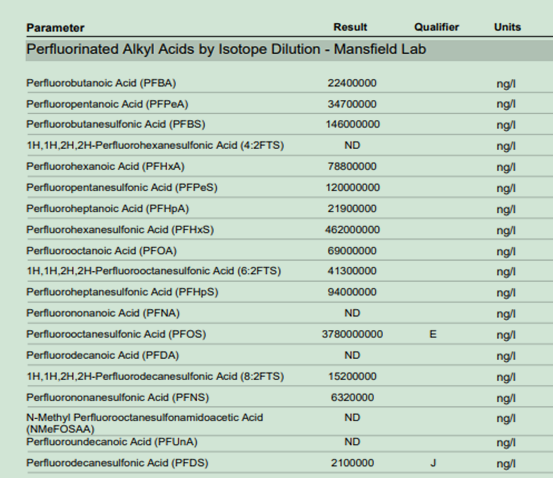
Alpha Analytical - 08/23/24. PFOA at levels less the 1 part per trillion in drinking water is linked to pancreatic cancer. At Brunswick PFOA was recorded at 69,000,000 parts per trillion in liquids that seeped into the ground.
In the conflagration that is the Persian Gulf, the disparate PFAS compounds in AFFF do not combine into a single new chemical. Instead, they are released as a complex mixture: some persist in their original form, some gradually transform into terminal compounds such as PFOS and PFOA, and all of them partition differently among seawater, sediments, wastewater, and living organisms. The result is not one contaminant, but a shifting, perpetual fluorinated burden that can intensify over time as precursor compounds degrade into more stable end products.
While black smoke fills the sky and headlines focus on oil prices, a chemical catastrophe is unfolding across the Middle East. The same war that is destabilizing global energy and food markets is coating landscapes, drainage systems, industrial wastewater streams, and coastal waters with deadly and persistent fluorinated compounds. The public hears about flames and airstrikes. It is not hearing about the highly carcinogenic foams sprayed to extinguish them.