From Burning Gas Fields to Poisoned Farmland
By Pat Elder
March 24, 2026
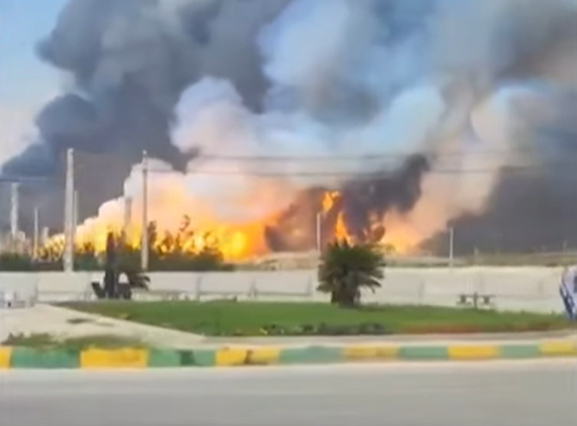
Israeli warplanes set Iran’s South Pars gas field ablaze on March 18, 2026.
On March 18, 2026, Israeli warplanes struck Iran’s South Pars gas field, igniting fires across one of the most critical energy complexes on Earth. The attack targeted infrastructure at the heart of the global natural gas system, sending flames through facilities that underpin a significant share of the world’s fertilizer production.
The South Pars strike and the closure of the Straits of Hormuz is not just an energy story—it is also a story about the global food supply. Modern agriculture is fundamentally dependent on natural gas, which is used to produce ammonia and urea fertilizers. The Persian Gulf region supplies a substantial share of the world’s nitrogen fertilizers, so disruptions to this system reverberate immediately through global markets, agricultural production, and ultimately the food supply. In response the most impacted nations, like Japan, are turning to the application of PFAS-laden sewage sludge on farm fields.
President Trump sought to distance the United States from the bombing, stating, “The United States knew nothing about this particular attack.” He attributed responsibility to Israel, saying it had “violently lashed out at the South Pars gas field.”
Japan is most vulnerable
The severe disruption of shipping through the Strait of Hormuz has curtailed the flow of urea, ammonia, and other fertilizers to Japan, a country almost entirely dependent on imported, gas-based nutrients. Because roughly one-third of globally traded fertilizers, and a significant share of the natural gas used to produce them, passes through this narrow corridor, the conflict in the Persian Gulf has immediately translated into supply shocks for downstream agricultural economies Reuters, March 17, 2026
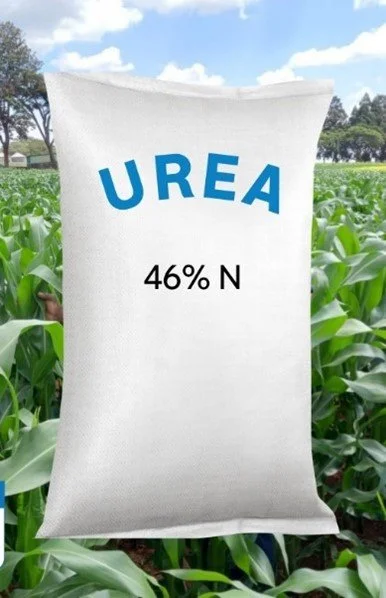
The word “urea” comes from the Greek ouron, meaning “urine.” Scientists later adopted the Latinized term urea to name the compound first identified in urine.
Without natural gas, we cannot easily make ammonia, and without ammonia, we can’t make urea. Without urea, modern agriculture struggles to produce enough food. That’s why events affecting natural gas—like a strike on the South Pars gas field can ripple all the way from energy markets to the price and availability of food in Japan.
The Shift to Sludge
Countries most exposed to fertilizer shocks—particularly Japan, South Korea, Taiwan, and import-dependent nations across Southeast and South Asia—are increasingly turning to wastewater sludge as a substitute nutrient source, a shift that risks transferring industrial PFAS contamination from urban waste streams directly onto agricultural soils. It’s awful!
The Tokyo University of Agriculture reported as early as 1997 that the use of sewage sludge in Japan was gradually increasing. Through the 1990s and 2000s, various policy changes encouraged land application of sewage sludge.
This trend took on new urgency, as Japan faced the 2022 Russia–Ukraine war, which drove up global fertilizer prices and reinforced interest in sewage sludge. The current Gulf crisis lays a second blow. For Japan, this is a severe threat to the nitrogen fertilizer system on which its agriculture depends.
While Japan has built a highly engineered system to process sewage sludge into a regulated agricultural commodity, many countries, including Bangladesh, Indonesia, and the Philippines, lack the infrastructure to treat and standardize these materials at scale.
Millions of tons of sewage sludge are produced each year in Japan’s wastewater treatment systems, containing recoverable nitrogen and phosphorus. Under normal conditions, only a small fraction is applied to agricultural land. The rest is incinerated.
Japan relies heavily on sludge incineration, but typical sewage sludge incinerators often operate at around 800 to 900 degrees Celsius. PFAS compounds generally require significantly higher temperatures for reliable destruction, often above 1,000 to 1,200 degrees Celsius. At lower temperatures, they may persist, transform, or are redistributed in ash and emissions.
Over time, these persistent chemicals enter the food chain—accumulating in crops, livestock, and seafood—and ultimately expose human populations through drinking water and diet, increasing risks of cancer, immune dysfunction, and other chronic health effects.
Programs already exist in prefectures across Japan. As urea prices climb again, similar programs are likely to expand.
When war threatens energy infrastructure and shipping in the Gulf, fertilizer markets react immediately. The damage is not limited to what is physically destroyed. The Japanese don’t seem to be concerned, however.

When Japanese Prime Minister Sanae Takaichi met with President Trump at the White House in Washington, D.C on March 19, 2026, the day after the South Pars attack, she supported the war against Iran and praised the American president. “I firmly believe that it is only you, Donald, who can achieve peace across the world. To do so, I am ready to reach out to many of the partners in the international community to achieve our objective together.”
On 12/5/25, before the onlaught of routine threats of war, urea prices were trading at $352 per ton. Escalatory remarks by President Trump are thought to have driven up the price of urea to $467, the day Prime Minister Takaichi met with President Trump. Three days later it passed $600 a ton, while it currently trades at about $683. This is impacting Japan perhaps more than any country. Japan imports 80-90% of its fertilizer while the US imports less than 25% of its fertilizer.
Urea Prices per ton in USD May 2025 – Mar 2026
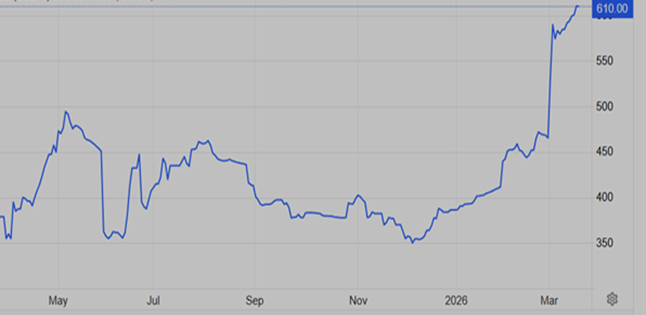
December 5, 2025 marked the turn of the Urea market.
Commodity markets routinely respond not just to events, but to expectations of future disruptions. In that context, the rapid and predictable rise in urea prices following escalating rhetoric and military action raises questions about whether some market participants close to the Trump administration were positioned to benefit in advance
Wastewater treatment systems
Wastewater treatment systems are not designed to remove many persistent chemicals. Instead, compounds such as PFAS move into the sludge. This is particularly troubling in Japan, where wastewater streams include not only household sewage, but effluent linked to high-tech manufacturing sectors, including semiconductor and electronics production, industries known to use lots of PFAS in various processes.
A 2026 study published in the Journal of Hazardous Materials found PFAS concentrations in sludge-derived fertilizers in Japan reaching 78,000 nanograms per kilogram (78,000 ppt) dry weight. Think of it as a giant coffee maker. The toxic brew drains into groundwater and streams, poisoning the food chain.
Modern systems of energy, agriculture, waste, and contamination are fused together in this brave new world. A gas field burns in the Persian Gulf. Foam drenches industrial fires. Fertilizer prices spike. Sewage sludge is spread on farmland. PFAS enters the soil and food. It never goes away.
Food Security
High urea prices and supply shortages put upward pressure on domestic food production costs, contributing to broader inflationary concerns. The long-term concern for Japan is that even if the conflict subsides quickly, damage to the high-tech liquefaction plants at South Pars and Ras Laffan could take years to repair, leading to a sustained period of high fertilizer costs.
What is unfolding in Japan, therefore, is not simply a shift in fertilizer sourcing. It is a convergence of geopolitical disruption, economic necessity, and environmental consequence.
In this sense, the fertilizer crisis triggered by conflict in the Persian Gulf is operating on two levels. At the surface, it is a story of supply chains, prices, and food security. Beneath that surface, it is accelerating a structural transition in agricultural inputs—one that may reduce dependence on volatile global markets while simultaneously increasing the dissemination of persistent industrial contaminants across the landscape.
In turning from imported fertilizer to domestically available sewage sludge, Japan may be stabilizing its nutrient supply in the short term. But it may also be embedding a second, slower-moving crisis into its soils and food systems—one measured not in price spikes, but in nanograms per kilogram, accumulating quietly over time.
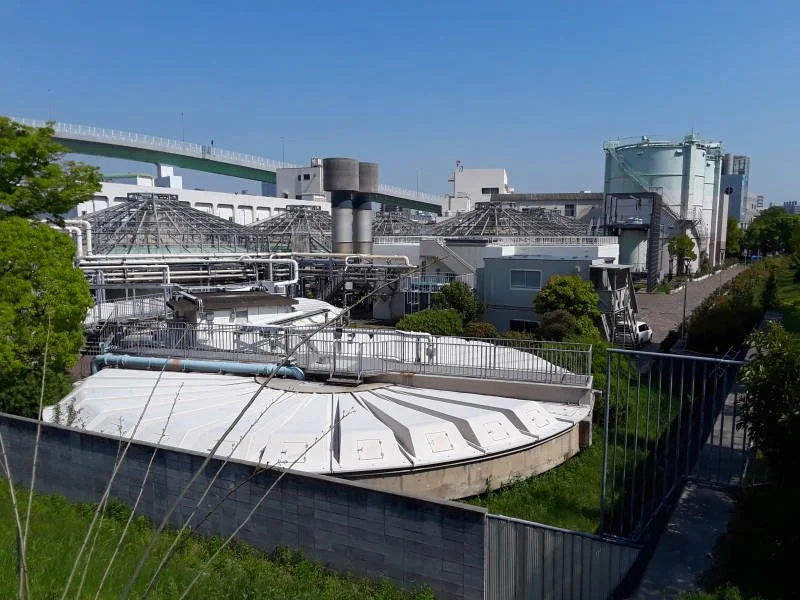
A wastewater treatment plant in Osaka, Japan.
It’s not just the PFAS that is so worrisome. After the wastewater treatment process, a wide range of contaminants remain, including heavy metals, pharmaceuticals, and hormones that wastewater plants are not designed to remove, along with endocrine-disrupting chemicals, microplastics, and persistent industrial pollutants such as PCBs and dioxins. When applied to farmland, they can migrate into soil, groundwater, crops, and the broader food chain, raising long-term environmental and public health concerns.
The story in Japan is a modern version of a recurring historical failure. For centuries, human societies have recklessly cast waste aside, only to see it return with a vengeance in contaminated water, food, and disease. Now, that ancient cycle is playing out on a global stage, linking war, energy, agriculture, and human health into a catastrophic merry-go-round.
We are still $600 short of covering the costs for a trip to Fort Ord to test surface water bodies for PFAS in and around the former Army base. Can you help make this happen?
Please see the bottom of this page to contribute: https://www.fortordcontamination.org/