PFAS Contamination at the Fort Shafter Hawai’i Child Development Center
Contaminated stream flows 60 feet from where children play.
By Pat Elder
February 7, 2026
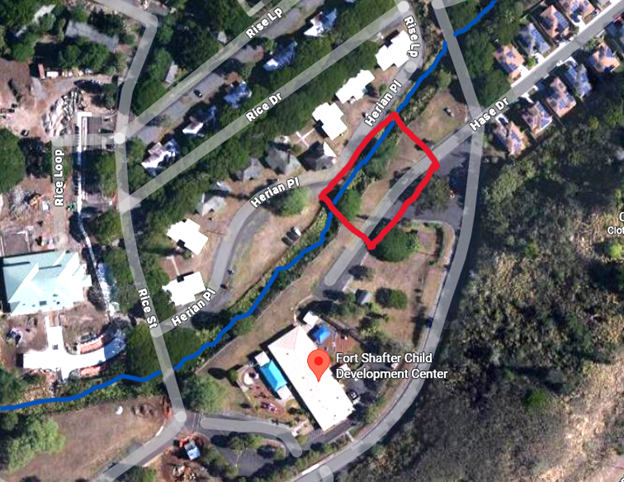
The former Fire Training Area at Fort Shafter is shown within the red rectangular area, 300 feet from the daycare facility. An unnamed stream cuts through the area, believed to carry PFAS toxins just 60 feet from where children play outside.
The Fort Shafter Child Development Center is a full-service childcare center located on the base within 300 feet of a former Army firefighting foam training area heavily contaminated with PFAS. A stream believed to be carrying the carcinogenic materials passes just 60 feet from where children play outside.
Given severe, documented PFOS contamination in surface soil within the same drainage approximately 300 feet upstream, it is reasonable to conclude that the adjacent stream is likely impacted, although it has not been tested.
These cancer-causing “forever chemicals” are likely in the air and in the dust at the daycare facility. They are closely linked to severe pre-natal and childhood developmental harm. The site is just three miles from downtown Honolulu.
From the Preliminary Assessment / Site Inspection, “A fire truck from Tripler Army Medical Center was parked along a curb in the roadway and AFFF was sprayed across a grassy area toward the adjacent, heavily vegetated stream/drainage canal. AFFF was sprayed long enough to make the foam flow, and then was shut off. Surface runoff from the area of potential interest flows to the adjacent heavily vegetated stream/drainage canal, which may be dry at any given time.”
The Army acknowledges the contamination, and it acknowledges the proximity to the day care facility, but it does not acknowledge the risk.
According to the Preliminary Assessment / Site Inspection, soil sampling at the AFFF Training Area detected 0.0019 mg/kg of PFOS, that is, 1.9 parts per billion.
The Hawai’i Department of Health’s Environmental Action Level (EAL) for PFOS in soil is 7.5E-04 mg/kg. They don’t present the data in a way that most people can understand. 7.5E-04 = 0.00075 = 0.75 ppb. (HIDOH - Table A)
The soil was found to have 1.9 ppb while the state says the level shouldn’t exceed .75 ppb. There. That’s understandable.
This site exceeds the Environmental Action Level by more than twofold. EALs are health-based screening thresholds. When exceeded, they signal the need for further investigation, interim controls, and cleanup—especially where children may be exposed.
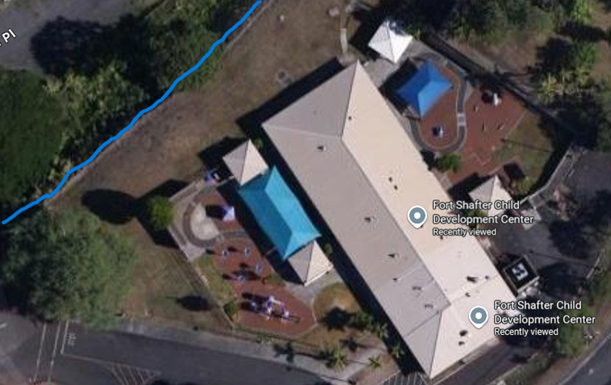
Drainage from the former AFFF site flows about 60 feet from the outdoor play area of the daycare center.
According to the PA/SI, (5.2 - AOPI’s), “The direction of surface runoff is toward a storm drain south of the AOPI near the Fort Shafter Child Development Center. Drainage from this area is likely conveyed to a drainage canal adjacent to the AOPI which eventually drains to Keehi Lagoon. The AFFF Training Area AOPI overlies the Main Post aquifer.”
When AFFF-contaminated drainage ditches and streams dry, PFAS residues remain bound to soil and organic matter. As surfaces dry, the wind lifts the carcinogenic material into the air, carrying PFAS as fine, toxic dust.
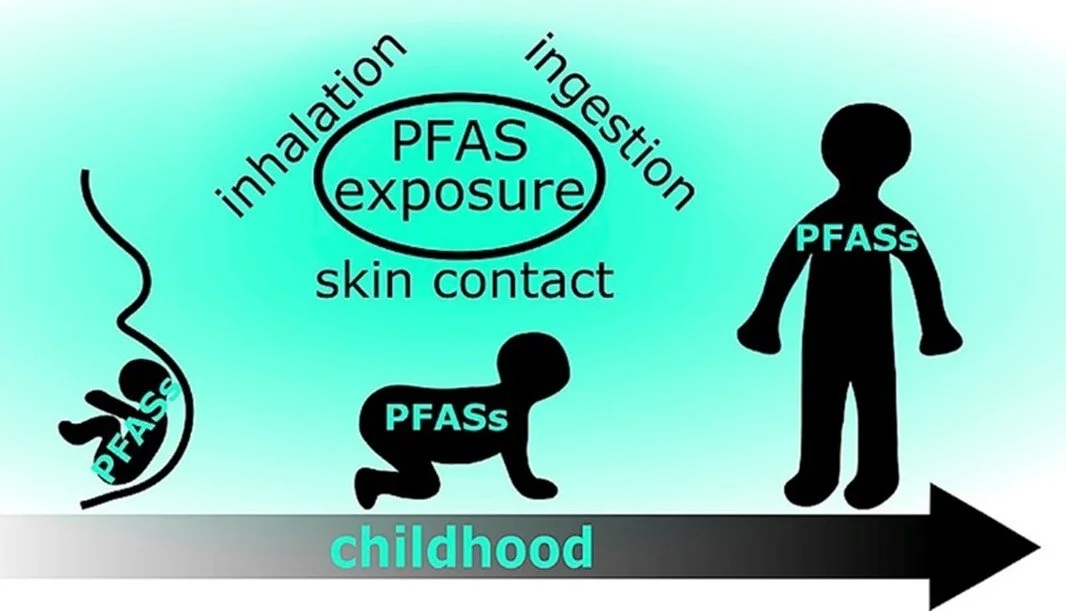
The dust enters buildings. It settles in homes and childcare facilities. It is inhaled, ingested, and absorbed decades after foam spraying ends. PFAS contamination does not move only through water, as the Army would have us believe, it moves from land to air to children, silently accumulating indoors.
According to the EPA, which is great on documenting these things but terrible about doing much about them, “Young children crawl on floors and put things in their mouths which leads to a higher risk of exposure to PFAS in carpets, household dust, toys, and cleaning products.”
In the United States infants and newborns routinely have detectable levels of PFAS in their blood. These chemicals cross the placenta and are measurable in umbilical cord blood. Consequently, nearly all babies born in the U.S. today begin life with PFAS already in their bodies as a result of environmental exposure.
A study led by researchers at Johns Hopkins in Maryland 20 years ago, found that PFOS was detected in 99% of umbilical cord blood samples and PFOA in 100% of samples tested, demonstrating these chemicals reach fetuses before birth. Infants are also exposed through breast milk from their mothers. This is not breaking news.
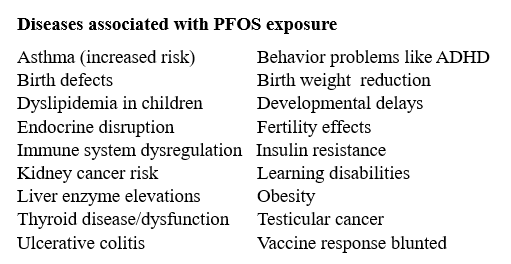
The PubChem website of the National Institutes of Health no longer shows a clearly worded “Associated Diseases/Disorders” block on their PFOS page. Until a few months ago, there were 80 diseases and disorders associated with PFOS with corresponding links to studies. Today, we are greeted with highly technical chemical information, taxonomy, links to literature, physical/chemical properties, and bioactivity data.
AFFF Training
Federal Fire Department staff recalled that AFFF training was conducted, “approximately one to three times in the 10 years prior to the March 2019 site reconnaissance visit.”
The Army’s “1–3 times in 10 years” framing reads like an intention to distort the record, not a realistic account of how foam-capable fire programs actually operated. If the foams were only sprayed 1-3 times in ten years and they resulted in the levels of contamination we see today, then there may be many hundreds of areas across the islands with dangerous contamination because the foams were recklessly used since the late 1960’s at multiple locations on dozens of installations.
During DoD fire protection practice, AFFF historically wasn’t only “live-fire training.” It also consisted of routine equipment readiness: proportioning checks, nozzle/line verification, and periodic system tests. The military has long recognized that foam systems must be regularly tested.
Fire Department staff claimed AFFF use ceased around 2017. But the Department of Defense did not issue formal guidance discontinuing AFFF testing and training until September 2020, following congressional mandates in the FY2020 National Defense Authorization Act. Even then, Congress allowed continued AFFF use for emergency response until 2024. The Trump administration has since relaxed this.
More importantly, the Child Development Center was built in the 1990s, meaning that AFFF training and childcare operations likely co-existed on the same footprint for more than 20 years.
Federal-State clash
We have a constitutional clash between the state’s public health authority and federal control of military land. Army bases, while federal facilities, must comply with state environmental laws. Theoretically, statutes such as CERCLA and the Clean Water Act require the Department of Defense to comply with state environmental standards. Hawaiʻi’s EALs function as health-based action triggers, particularly protective of children and residential exposures. When they are exceeded, the state can identify a current public-health concern, require additional investigation, and demand interim exposure controls.
In practice, however, the legalists are left dreaming. Hawaiʻi is relegated to a lapdog / watchdog role. The state cannot gain access to remediate contamination on active Army bases, although it can witness its citizens being poisoned.
Of course, the state is not obligated to renew Army leases of land.
Local regulators, scientists, and advocates are barred from conducting independent environmental monitoring on U.S. military bases. In Okinawa, access is denied. In Germany, sampling at installations like Spangdahlem Air Base is also denied. In the United States, state and local authorities encounter the same fence line, the same jurisdictional wall.
Whether you are in Maryland, Hawaiʻi, Okinawa, or Germany, the outcome is the same. We are all subject to a single supra-national authority that overrides local law, restricts independent science, and insulates itself from environmental accountability.
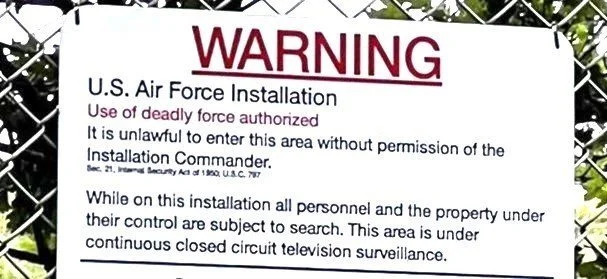
We figured it wasn’t worth risking our lives to take environmental samples on the Spangdahlem Airbase, so we got as close as the law allowed.
Physical cleanup on military installations like Fort Shafter remains under federal control, and it is funneled into the Army-managed CERCLA process, which the Army uses to delay action by ignoring EALs. In other words, the Army can’t be bothered by superfluous state standards; the Army follows the CERCLA process.
Hawaii can issue notices of violation. It can suggest further sampling. It can cry to the EPA, but that agency is on the sidelines. The EPA held such promise at one time.
A note on PFAS volatility
Many PFAS precursors historically present in AFFF, like fluorotelomer alcohols and sulfonamides, are volatile or semi-volatile. They can enter the air and later bind to indoor dust and surfaces. In a child-care setting near a former AFFF training area, PFAS can be transported indoors through aerosol deposition, resuspended particulates, and simple tracking on shoes and equipment, where they accumulate in dust. This matters because infants and toddlers are uniquely vulnerable: they breathe closer to the floor, have frequent hand-to-mouth contact, and ingest far more dust per body weight than adults, making indoor air and dust dangerous exposure pathways that are routinely overlooked in site assessments.
Reasonable protective measures include upgrading HVAC filtration with more frequent filter changes, installing portable HEPA air cleaners in nap areas. Cleaning practices must minimize dust resuspension. Dry sweeping and standard vacuuming should be avoided or replaced with wet mopping and wet wiping, and any vacuuming should be done only with sealed, true-HEPA units. These steps are not a substitute for indoor air, dust, and exposure investigations, but they are prudent, low-risk actions consistent with what is known about PFAS behavior indoors—especially in a facility serving very young children.
Let’s examine how the Army characterizes the threat of PFAS in the dust and in the air at Fort Shafter.
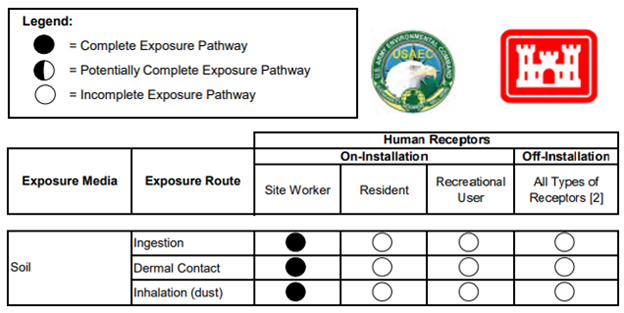
Figure 7-7 Conceptual Site Model for AFFF Training Area, Parking Lot Fires, and Building 322: Former Fire Station #3 AOPI USAEC PFAS Preliminary Assessment / Site Inspection Fort Shafter, Hawaii
Figure 7-7 presents an incomplete and misleading depiction of exposure pathways—particularly for nearby residents. Insignias are from the US Army Environmental Command and the U.S. Army Corps of Engineers.
While the model acknowledges soil and groundwater contamination, it omits residential exposure routes such as indoor dust, resuspended soil particulates, vapor-phase or aerosolized transport, and routine human contact with contaminated media tracked indoors. This omission is especially problematic given the site’s proximity to residential housing and a daycare facility. By narrowing this Conceptual Site Model to a limited set of pathways, the Army effectively constrains the scope of investigation and forecloses meaningful evaluation of cumulative, chronic exposure risks to residents, contrary to CERCLA’s intent.
Given the 60-foot proximity of expected contamination to the Child Development Center, the only responsible posture is an independent, non-Army-controlled exposure assessment, including:
· Indoor dust sampling
· Indoor and outdoor air sampling (particulates and resuspension)
· Transparent evaluation of soil, sediment, and stormwater transport
· Voluntary blood testing for long-term daycare staff and nearby residents living on Herian Place or Haase Drive.
The Army’s PFAS investigation at Fort Shafter is not designed to protect children or residents. It is designed to manage liability.
================================
This is the 5th part of a multi-part series..
Part 1 – The Army is leaving contaminated O’ahu sites to focus on Pohakuloa
Part 2 – PFAS contamination at Pohakuloa
Part 3 – PFAS contamination at three leased bases on O’ahu
Part 4 – PFAS contamination at Wheeler Army Airfield
This project is supported by financial assistance from the Sierra Club of Hawaii.
Please consider donating to the Sierra Club of Hawai’i. Your donation will continue efforts to achieve Hawaiʻi’s 100% renewable energy goal, defend our oceans and forests, and build a more self-reliant and resilient community that prioritizes justice, enhances natural and cultural resources, and protects public health over corporate profit. Donate Here.